

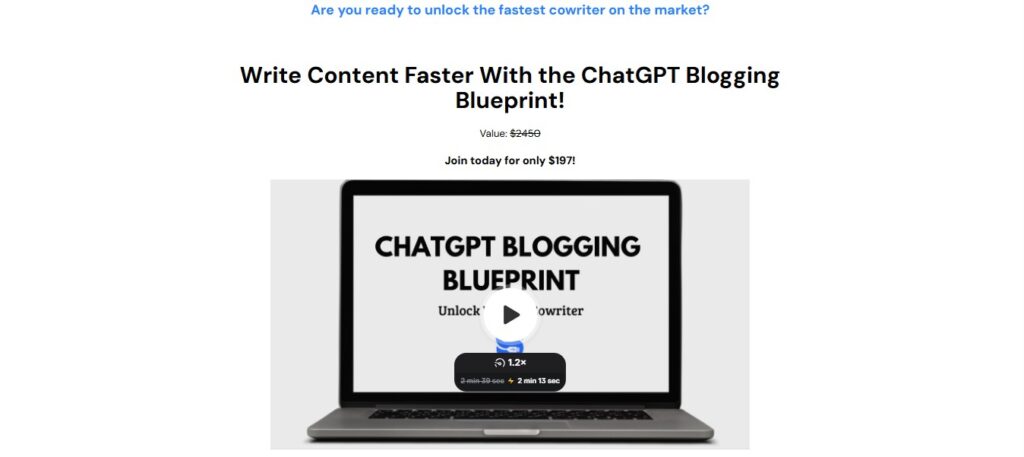
Nina Clapperton’s ChatGPT Blogging Blueprint promises to revolutionize your content creation process using artificial intelligence. This comprehensive course targets bloggers and content creators seeking to scale their output while maintaining quality and authenticity in their writing.
The ChatGPT Blogging Blueprint effectively teaches content creators how to leverage artificial intelligence for blog writing, content planning, and SEO optimization. While the course provides valuable prompts and strategies for AI-assisted blogging, success depends heavily on understanding your niche, maintaining human oversight, and adapting the techniques to your specific audience and brand voice.
Course Overview
Nina Clapperton‘s ChatGPT Blogging Blueprint emerges as a timely response to the content creation challenges facing modern bloggers. This digital course addresses the growing demand for efficient content production methods while maintaining editorial standards that engage readers and satisfy search engines.
The program structure divides into comprehensive modules that guide students through the entire AI-assisted blogging process. From initial concept development to final publication, Nina provides systematic approaches for integrating ChatGPT into existing content workflows without sacrificing authenticity.
Moreover, the course recognizes that effective AI utilization requires more than simple prompt engineering. Nina emphasizes the importance of strategic thinking, audience analysis, and content planning as foundational elements that enhance AI effectiveness rather than replace human creativity.
The curriculum addresses practical concerns that many content creators face when considering AI integration. These include maintaining brand voice consistency, avoiding common AI pitfalls, and developing quality control systems that ensure published content meets professional standards.
Additionally, the course explores advanced applications beyond basic content generation. Students learn to use ChatGPT for research assistance, headline optimization, content repurposing, and social media adaptation strategies that extend the value of their primary content investments.
The delivery format combines video instruction with downloadable resources, including prompt libraries and workflow templates. This multimedia approach accommodates different learning preferences while providing practical tools for immediate implementation.
Furthermore, Nina incorporates current best practices from content marketing research to ensure the strategies taught align with industry standards and search engine requirements.
Content Breakdown
The ChatGPT Blogging Blueprint’s curriculum unfolds through strategically sequenced modules that build competency progressively. The opening sections establish foundational knowledge about AI capabilities and limitations before advancing to practical implementation strategies.
The initial modules focus on prompt engineering fundamentals, teaching students how to craft instructions that produce useful, relevant responses from ChatGPT. Clapperton demonstrates various prompt types and explains how subtle wording changes can dramatically affect output quality and relevance.
Subsequently, the course delves into content planning strategies that leverage AI for topic research, keyword analysis, and content calendar development. These sections show how ChatGPT can streamline the traditionally time-consuming research phase while uncovering content opportunities that manual research might miss.
The core content creation modules represent the course’s centerpiece, providing detailed workflows for different blog post types. From listicles and how-to guides to in-depth analyses and opinion pieces, students learn tailored approaches for each content format.
Furthermore, the program addresses content optimization techniques that enhance SEO performance while maintaining readability. These sections cover meta description creation, header optimization, and internal linking strategies that AI can assist with effectively.
Advanced modules explore content repurposing strategies that maximize the value of each piece created. Students learn to transform blog posts into social media content, email newsletters, and other formats using AI assistance for efficient adaptation.
Key learning components include:
- Prompt engineering frameworks for consistent, high-quality outputs
- Content planning systems that integrate AI research capabilities
- Quality control processes for maintaining editorial standards
- SEO optimization techniques enhanced by AI assistance
- Workflow automation strategies for improved efficiency
The curriculum also addresses ethical considerations and best practices for AI-assisted content creation, ensuring students understand transparency requirements and quality maintenance responsibilities.
Teaching Quality
Nina Clapperton brings substantial credibility to the course through her demonstrated success in content marketing and digital strategy. Her teaching style balances practical instruction with strategic insights, helping students understand not just how to use AI tools but when and why specific approaches work best.
The video production quality meets professional standards with clear audio, well-organized visual presentations, and logical information sequencing. Clapperton’s explanations progress from basic concepts to advanced applications without overwhelming beginners or boring experienced users.
However, the teaching pace occasionally feels rushed when covering complex prompt engineering concepts. Some students might benefit from slower explanations of intricate AI interaction strategies, though the ability to replay sections mitigates this concern effectively.
The course incorporates real-world examples and case studies that demonstrate successful AI-assisted content creation across various niches. These practical illustrations help students visualize how the techniques apply to their specific circumstances and content goals.
Moreover, Nina provides troubleshooting guidance for common challenges students encounter when implementing AI workflows. This practical support addresses realistic obstacles rather than presenting overly optimistic scenarios that don’t match real-world experiences.
The instructional methodology emphasizes hands-on practice through guided exercises and template applications. This experiential approach helps students develop competency through active engagement rather than passive consumption of theoretical information.
Effective AI utilization in content creation requires understanding both the technology’s capabilities and the human elements that ensure quality and authenticity. Content Marketing Institute
The course materials include multiple learning resources to accommodate different preferences, from video demonstrations to written guides and downloadable templates.
Practical Application
The ChatGPT Blogging Blueprint excels in providing actionable strategies that students can implement immediately. Each module includes specific exercises designed to help students practice new techniques with their own content projects and audience requirements.
The prompt libraries serve as valuable starting points for students who struggle with initial AI interactions. These pre-tested prompts provide confidence-building success experiences while students develop their own prompt engineering skills through guided practice.
Furthermore, the workflow templates help students integrate AI assistance into existing content creation processes without disrupting successful established routines. This practical approach recognizes that wholesale process changes often fail while gradual integration succeeds more consistently.
The course addresses implementation challenges realistically, acknowledging that AI-assisted content creation requires adjustment periods and ongoing refinement. Clapperton provides guidance for overcoming common obstacles and maintaining momentum during the learning curve.
Additionally, the program includes quality control checklists and editing frameworks that ensure AI-generated content meets publication standards. These tools help students maintain consistency while developing judgment skills for evaluating AI output effectiveness.
The practical components also cover integration strategies for popular content management systems and blogging platforms. This technical guidance helps students implement the strategies within their existing technological infrastructure without requiring additional software investments.
| Implementation Phase | Time Required | Key Activities | Success Metrics |
|---|---|---|---|
| Foundation Setup | 1-2 weeks | Prompt testing, workflow design | Consistent AI outputs |
| Content Creation | 2-4 weeks | Publishing practice, quality control | Publication schedule adherence |
| Optimization | 4-8 weeks | Performance analysis, refinement | Improved engagement metrics |
| Scaling | Ongoing | Process automation, team training | Increased content volume |
The practical applications extend beyond individual content creation to include team training resources for larger content operations seeking to implement AI assistance systematically.
Student Results
Early feedback from course participants indicates varied but generally positive outcomes, with many reporting significant improvements in content production efficiency. Students who consistently apply the taught methodologies typically see substantial increases in their publishing frequency without proportional time investments.
The course’s effectiveness appears strongest among students who approach AI as a writing assistant rather than a replacement for human creativity. Those who maintain active involvement in editing, fact-checking, and brand voice alignment achieve better results than students who attempt to automate content creation completely.
Moreover, students with existing blogging experience tend to implement the strategies more successfully than complete beginners. The course assumes basic content marketing knowledge, which can create challenges for students without foundational blogging skills.
The program works particularly well for students managing multiple content channels or tight publishing schedules. The efficiency gains become most apparent when content demands exceed traditional manual production capabilities.
Additionally, students report that the course’s value extends beyond immediate content creation to include improved understanding of AI capabilities and limitations. This broader education helps students make better decisions about AI integration across various business functions.
However, some students struggle with the transition from traditional writing methods to AI-assisted approaches. The mindset shift required for effective AI collaboration can be challenging for writers who prefer complete creative control over their content.
“Nina’s course transformed my content creation process. I went from publishing twice a week to daily posts while maintaining quality that actually improved my engagement rates.” – Sarah Chen, Lifestyle Blogger
The most successful students typically combine the course strategies with continued learning about AI developments and content marketing trends, treating the course as a foundation rather than a complete solution.
Investment Analysis
The ChatGPT Blogging Blueprint’s pricing reflects its positioning as a specialized professional development course for serious content creators. When compared to traditional copywriting courses or content marketing programs, the investment represents competitive value for the specific AI-focused instruction provided.
The course cost should be evaluated against the potential time savings and productivity improvements it enables. Students who successfully implement the strategies often recoup their investment through increased content output that drives business growth or reduces outsourcing expenses.
Furthermore, the lifetime access model provides ongoing value as AI technologies continue evolving. Students can revisit content and benefit from updates without additional investment, which enhances the long-term value proposition significantly.
The program includes bonus materials and resources that add value beyond the core curriculum. These supplementary elements include prompt libraries, workflow templates, and industry insights that would typically require separate purchases or subscriptions.
Additionally, the course investment should be considered alongside the ongoing costs of AI tool subscriptions required for implementation. While ChatGPT access costs remain relatively modest, students should budget for these recurring expenses when evaluating total program costs.
The return on investment varies significantly based on student implementation consistency and existing content monetization strategies. Students with established audiences or revenue streams typically see faster returns than those building from scratch.
The most successful content creators view AI tools as productivity multipliers rather than creativity replacements, investing in training that enhances their strategic capabilities. Harvard Business Review
The pricing structure occasionally includes promotional discounts and payment plan options that make the course more accessible to creators with varying budget constraints.
Course Alternatives
Several alternatives exist for students seeking AI-assisted content creation training, each offering different approaches and specialization levels. Understanding these options helps potential students make informed decisions based on their specific needs and experience levels.
Copy.ai and Jasper.ai offer their own training programs focused specifically on their proprietary platforms. These alternatives provide deep platform expertise but may limit students to specific AI tools rather than teaching transferable prompt engineering principles.
Coursera and Udemy host various AI writing courses taught by different instructors. These platforms offer broader course selection and often lower pricing, though the quality and specificity can vary significantly compared to specialized programs.
Additionally, many content marketing agencies and consultants provide AI integration services and training. These personalized options offer customized guidance but typically require substantially higher investments than self-paced online courses.
YouTube and blog-based free resources provide basic AI writing instruction, though these scattered sources lack the comprehensive structure and practical focus of dedicated courses. Free alternatives work well for initial exploration but often insufficient for systematic skill development.
Professional associations and marketing organizations increasingly offer AI-focused workshops and webinars. These options provide networking opportunities and industry insights but may lack the practical depth required for implementation.
Popular alternatives include:
- Jasper.ai Bootcamp – Platform-specific training with advanced features
- Copy.ai Academy – Free resources with paid advanced courses
- Content Marketing Institute Programs – Industry-focused AI education
- Coursera AI Writing Specializations – University-backed curricula
- Udemy AI Content Creation Courses – Budget-friendly options with varied quality
Each alternative offers unique advantages and limitations that students should evaluate based on their learning preferences, budget constraints, and specific implementation goals.
Pros and Cons
Pros:
- Comprehensive coverage of AI-assisted content creation workflows
- Practical prompt libraries and templates for immediate implementation
- High-quality video instruction with clear demonstrations
- Lifetime access allows for repeated study and reference
- Addresses ethical considerations and quality control requirements
- Suitable for various content types and niches
- Includes bonus resources and workflow templates
- Money-back guarantee reduces purchase risk
- Regular updates keep content current with AI developments
Cons:
- Focuses primarily on ChatGPT rather than multiple AI platforms
- Assumes basic content marketing and blogging knowledge
- Requires ongoing AI tool subscriptions for full implementation
Overall Rating
Score: 8.3/10
The ChatGPT Blogging Blueprint delivers substantial value for content creators seeking to integrate AI assistance into their workflows effectively. The comprehensive instruction, practical resources, and strategic approach create a solid foundation for AI-assisted content creation success.
While the course requires investment beyond the initial purchase and assumes certain baseline knowledge, the potential productivity improvements and content quality enhancements justify the investment for committed students.
Verdict
Nina Clapperton’s ChatGPT Blogging Blueprint succeeds in providing practical, implementable strategies for AI-assisted content creation. The course works best for content creators who understand that AI serves as a powerful assistant rather than a replacement for human creativity and strategic thinking.
For bloggers and content marketers willing to invest time in learning and applying the methodologies consistently, this program offers excellent value and clear pathways to improved productivity. The comprehensive nature and practical focus make it worthwhile for serious content creators.
However, students should approach this course with realistic expectations about the learning curve and ongoing effort required for success. The strategies taught are powerful but require practice, refinement, and adaptation to individual circumstances and audience needs.
The course serves as an excellent foundation for AI-assisted content creation, though students should plan for continued learning as AI technologies evolve and new opportunities emerge in the content marketing landscape.
Video Credit: Click Wars Podcast / YouTube
Frequently Asked Questions
Is the ChatGPT Blogging Blueprint suitable for complete blogging beginners?
The ChatGPT Blogging Blueprint assumes familiarity with basic blogging concepts, content marketing principles, and publishing workflows. While complete beginners can benefit from the course, they may find certain sections challenging without foundational knowledge about SEO, audience development, and content strategy.
Beginners should consider supplementing the course with basic blogging education or expect to spend additional time researching fundamental concepts referenced throughout the curriculum. The course focuses on AI integration rather than teaching blogging from scratch.
However, motivated beginners who are willing to invest extra effort in understanding foundational concepts can successfully implement the strategies taught. The key is approaching the course with realistic expectations about the learning curve involved.
How much time does it take to see results from implementing the course strategies?
Most students begin seeing productivity improvements within 2-3 weeks of consistent implementation, though significant content quality and efficiency gains typically require 4-6 weeks of regular practice. The timeline depends heavily on existing blogging experience and implementation consistency.
Students who dedicate time to practicing prompt engineering and refining their AI workflows generally see faster results than those who attempt to implement everything simultaneously. The course recommends gradual integration of techniques rather than wholesale workflow changes.
Long-term results become most apparent after 2-3 months of consistent application, when students have developed confidence with AI assistance and refined their quality control processes. The initial learning investment pays dividends through sustained productivity improvements.
Can the techniques taught work for niches beyond general blogging?
The ChatGPT Blogging Blueprint’s strategies adapt well to various content niches, including business blogging, lifestyle content, technical writing, and educational materials. The prompt engineering principles and workflow frameworks apply across different subject matters effectively.
However, highly specialized niches requiring deep technical expertise or regulated content may need additional quality control measures beyond those covered in the course. Students in these areas should plan for extra fact-checking and expert review processes.
The course provides examples from multiple niches and teaches adaptation strategies that help students customize the approaches for their specific audiences and content requirements. Most content types can benefit from the AI assistance methods taught.
What ongoing costs should students expect beyond the course purchase?
Students need ChatGPT access for implementing the course strategies, which currently costs $20 monthly for ChatGPT Plus or requires usage-based pricing for API access. These subscription costs represent the primary ongoing expense for course implementation.
Additional AI tools mentioned in the course may require separate subscriptions, though ChatGPT access alone is sufficient for implementing most strategies taught. Students can choose to add other tools gradually based on their specific needs and budget constraints.
Some students may also invest in complementary tools for content management, SEO analysis, or social media scheduling, though these represent optional enhancements rather than requirements for success with the core course strategies.
How does this course compare to free AI writing resources available online?
The ChatGPT Blogging Blueprint provides structured, comprehensive instruction that free resources typically cannot match. While YouTube videos and blog posts offer valuable tips, they lack the systematic approach and practical frameworks that make implementation successful.
Free resources often focus on individual techniques rather than complete workflows, leaving students to piece together information from multiple sources. The course provides cohesive instruction that builds skills progressively and addresses common implementation challenges.
However, motivated students can achieve similar results using free resources if they invest significantly more time in research, testing, and workflow development. The course’s value lies in providing tested strategies and saving students the time required for independent experimentation.
Sources: