

Last updated on July 20th, 2025 at 02:43 am
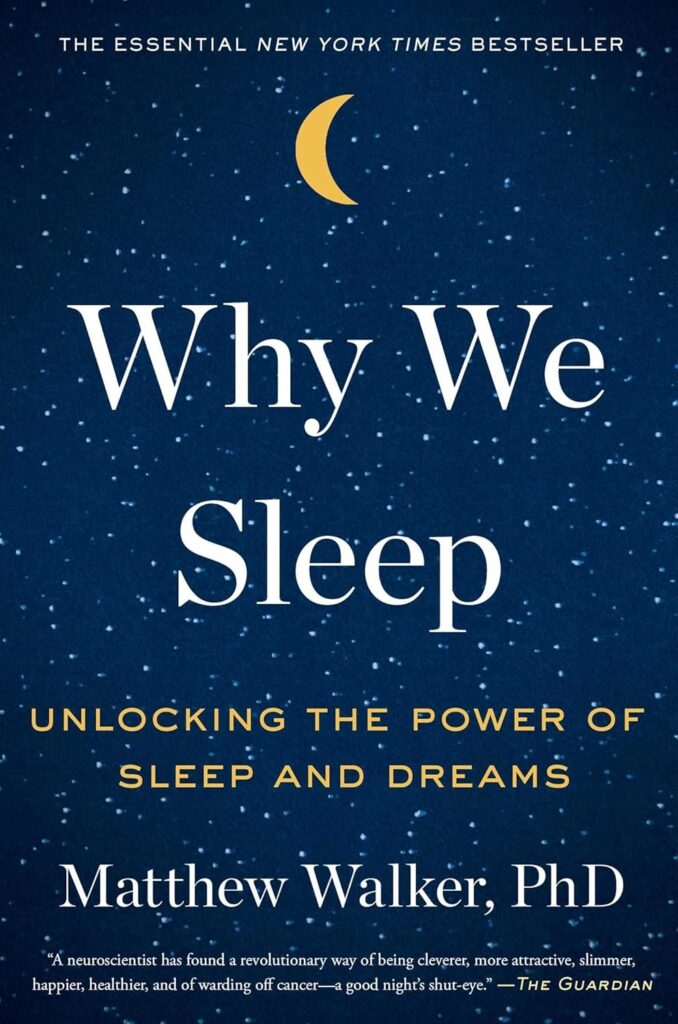
Your nights might be sabotaging your days more than you realize. Matthew Walker’s groundbreaking book “Why We Sleep” transforms our understanding of this fundamental biological process that affects every aspect of human performance and health.
Is "Why We Sleep" worth reading for better health and performance? Absolutely. Matthew Walker's research-backed masterpiece reveals how sleep impacts memory, immunity, creativity, and longevity while providing practical strategies for optimizing your nightly rest. This book fundamentally changes how you prioritize and approach sleep.
The Sleep Crisis Revolution
The world has fundamentally misunderstood sleep for decades. Meanwhile, Matthew Walker’s “Why We Sleep” arrives as a much-needed wake-up call to this widespread neglect. The book systematically dismantles the “sleep is for the weak” mentality that has dominated modern culture since the industrial revolution.
Furthermore, Walker traces how our society shifted from respecting natural sleep rhythms to prioritizing productivity over rest. This transformation happened gradually, yet its impact on human health has been catastrophic. The author demonstrates how schools, workplaces, and social institutions consistently undervalue sleep while promoting harmful sleep-depriving behaviors.
The current statistics paint a disturbing picture. According to the National Sleep Foundation’s 2025 Sleep in America Poll, 60% of adults aren’t getting the recommended amount of sleep regularly. This isn’t just about feeling tired—it’s about systematic damage to your brain and body that accumulates over time.
Sleep is the single most effective thing we can do to reset our brain and body health each day. Matthew Walker
Scientific Foundation
The book’s strength lies in its rigorous scientific approach to understanding sleep’s biological mechanisms. Walker weaves together decades of neuroscience research, clinical studies, and brain imaging data to paint a comprehensive picture of why we sleep. He explores how sleep affects brain chemistry, hormone regulation, and cellular repair processes.
Additionally, the research reveals fascinating insights about memory consolidation during sleep. Studies from Harvard Medical School show that REM sleep processes and consolidates new information you’ve learned during the day. This isn’t passive recovery—it’s active brain maintenance that determines your cognitive abilities.
The author also examines sleep’s role in creativity and problem-solving. Historical examples include Mendeleev’s periodic table discovery and Paul McCartney’s composition of “Yesterday”—both came to them in dreams. Walker explains the neurological mechanisms that make sleep a creativity incubator.
Walker’s background as Professor of Neuroscience at UC Berkeley and Director of the Center for Human Sleep Science lends credibility to his assertions. He distinguishes between established scientific findings and emerging research, providing readers with an honest assessment of what we know and don’t know about sleep.
Sleep Stages Decoded
Moving beyond basic sleep education, Walker provides detailed explanations of sleep architecture. He breaks down the four stages of non-REM sleep and REM sleep, explaining what happens in your brain during each phase. This knowledge helps readers understand why different sleep stages serve unique functions.
The book reveals how deep sleep (stages 3 and 4) focuses on physical restoration and immune system strengthening. During these stages, your body releases growth hormone, repairs tissues, and consolidates factual memories. Meanwhile, REM sleep handles emotional processing and creative problem-solving.
Walker also addresses how sleep architecture changes throughout your lifespan. Teenagers naturally shift to later bedtimes and wake times—this isn’t laziness but biological necessity. Similarly, older adults experience changes in sleep quality and timing that require different approaches to sleep optimization.
The shorter your sleep, the shorter your life span. Matthew Walker
Health Consequences Revealed
The book presents alarming evidence about sleep deprivation’s health impacts. Walker explains how insufficient sleep affects your immune system, making you more susceptible to infections and reducing vaccine effectiveness by up to 50%. This connection between sleep and immunity has become particularly relevant in our post-pandemic world.
Sleep deprivation also dramatically increases your risk of chronic diseases. The book details how lack of sleep contributes to obesity, diabetes, cardiovascular disease, and even certain cancers. These aren’t correlations—Walker explains the biological mechanisms that make sleep deprivation a direct cause of these health problems.
Mental health connections are equally concerning. Sleep-deprived individuals show 60% more emotional reactivity and increased risk of depression, anxiety, and suicide. The book explains how sleep disruption affects neurotransmitter balance and emotional regulation systems.
Perhaps most frightening is sleep’s connection to Alzheimer’s disease. Walker presents evidence that poor sleep allows toxic proteins to accumulate in the brain, potentially contributing to dementia development. This research has profound implications for aging populations worldwide.
Memory and Learning Enhancement
One of the book’s most compelling sections explores sleep’s role in memory consolidation. Walker explains how your brain transfers information from temporary to permanent storage during sleep. Without adequate rest, you literally lose the ability to form new memories effectively.
The process involves both non-REM and REM sleep stages. During non-REM sleep, your brain replays the day’s experiences, strengthening neural connections. REM sleep then integrates these memories with existing knowledge, creating insights and creative connections.
Research from Yale School of Medicine confirms that sleep plays a critical role in long-term memory formation. Students who sleep after learning retain information significantly better than those who stay awake.
The book also reveals how sleep affects learning capacity. Even moderate sleep deprivation reduces your ability to acquire new information by up to 40%. This has profound implications for students, professionals, and anyone seeking to learn new skills.
Workplace Applications
Walker addresses workplace sleep issues with remarkable insight. He critiques corporate cultures that reward sleep deprivation and explains how this actually reduces productivity and innovation. The book presents evidence that well-rested employees make better decisions, show improved creativity, and demonstrate superior leadership abilities.
The author also examines how shift work disrupts natural circadian rhythms. He provides strategies for shift workers to minimize health impacts while acknowledging that some disruption is unavoidable. These recommendations could benefit millions of healthcare workers, first responders, and other essential personnel.
Sleep’s impact on leadership effectiveness is particularly interesting. Walker explains how sleep-deprived leaders make more impulsive decisions, show reduced empathy, and struggle with strategic thinking. This research has implications for corporate governance and decision-making processes.
Sleep is not the absence of wakefulness. It is far more than that. It is a different kind of wakefulness. Matthew Walker
Dreams and Emotional Processing
The book delves deeply into dream science, explaining how REM sleep serves as overnight therapy. During dreams, your brain processes emotional experiences while stripped of stress chemicals like norepinephrine. This allows you to wake up with better emotional regulation and reduced emotional reactivity.
Walker explains how dreams help you problem-solve by connecting disparate pieces of information. The brain drops its logical constraints during REM sleep, allowing for creative connections that wouldn’t occur during waking hours. This explains why “sleeping on it” often leads to breakthrough insights.
The author also addresses nightmares and their therapeutic function. Even disturbing dreams serve important purposes, helping you process traumatic experiences and prepare for future challenges. This research has implications for PTSD treatment and trauma therapy.
Cultural and Societal Impact
Walker examines how modern society systematically undermines healthy sleep. Electric lighting, digital devices, and 24/7 connectivity all disrupt natural circadian rhythms. The book presents evidence that these disruptions contribute to widespread sleep disorders and health problems.
Educational systems receive particular criticism. Walker argues that early school start times for teenagers violate their biological sleep needs. He presents evidence that later start times improve academic performance, reduce accidents, and enhance mental health among students.
The book also explores how different cultures approach sleep. While Western societies often view sleep as unproductive time, other cultures recognize its importance for health and creativity. This cultural comparison highlights how arbitrary our sleep-depriving practices can be.
Score: 9/10
This book deserves an exceptional rating for its scientific rigor, life-changing insights, and practical applications. Walker successfully transforms sleep from a passive necessity into an active health strategy while providing evidence-based recommendations for optimization.
The only minor drawback is occasional repetition of key concepts, which some readers might find redundant. However, this reinforcement often helps cement important ideas about sleep’s fundamental importance.
What Will You Learn
After reading “Why We Sleep,” you’ll understand:
- The neurological mechanisms underlying sleep stages and their functions
- How sleep affects memory consolidation, creativity, and problem-solving
- The connection between sleep and immune system functioning
- Why sleep deprivation increases disease risk and shortens lifespan
- How to create ideal sleep environments and bedtime routines
- Practical strategies for optimizing sleep quality and duration
- The impact of caffeine, alcohol, and technology on sleep quality
- Why dreams are essential for emotional processing and creativity
Reader Testimonials
“This book changed my sleeping habits. It is very informative and helps me think differently about sleep, and I now get much better sleep. My book group read it too and everyone felt the same.” – Elizabeth S. Hazard, verified purchaser
“One of the most important books that I have ever read. If you want to read before going to bed, this is the book to have. This book has the potential to be life changing depending how serious the reader is about their health.” – B145, verified purchaser
“I was once fond of saying, ‘Sleep is the third pillar of good health, alongside diet and exercise.’ I have changed my tune. Sleep is more than a pillar; it is the foundation on which the other two health bastions sit.” – LenZen, verified purchaser
Pros and Cons
Pros:
- Extensive research backing every claim with peer-reviewed studies
- Practical strategies for immediate sleep improvement
- Engaging writing style that makes complex neuroscience accessible
- Comprehensive coverage of sleep’s impact on all life areas
- Transforms understanding of sleep’s importance for health and performance
Cons:
- Some readers may find the health consequences anxiety-provoking
- Occasionally repetitive in emphasizing key messages
- Limited discussion of certain sleep aids and treatments
Sleep Optimization Strategies
The book provides twelve evidence-based recommendations for better sleep:
- Maintain consistent sleep schedule – Go to bed and wake up at the same time daily
- Create optimal sleep environment – Cool (around 65°F), dark, and quiet
- Avoid caffeine after 2 PM – It has a 6-8 hour half-life
- Limit alcohol consumption – It fragments sleep and reduces REM
- Exercise regularly – But not within 3 hours of bedtime
- Manage light exposure – Bright light in morning, dim light in evening
- Avoid large meals before bed – They can disrupt sleep quality
- Create bedtime routine – Signals to your brain that it’s time to sleep
- Don’t lie in bed awake – If you can’t sleep, get up and do quiet activity
- Avoid daytime naps – They can interfere with nighttime sleep
- Keep bedroom for sleep only – Strengthen the bed-sleep association
- Manage stress and anxiety – Practice relaxation techniques before bed
The Future of Sleep Science
Walker discusses emerging research and future directions in sleep science. He explores potential treatments for sleep disorders, the development of sleep-tracking technology, and how our understanding of sleep continues to evolve.
The book also addresses societal changes needed to support healthy sleep. Walker advocates for later school start times, workplace nap policies, and cultural shifts that prioritize sleep health. These changes could have massive public health benefits.
Recent developments in sleep research continue to support Walker’s arguments. Studies from 2025 show a 37.92% annual growth rate in sleep deprivation research, indicating growing scientific recognition of sleep’s importance.
Verdict
“Why We Sleep” stands as essential reading for anyone serious about optimizing their health, performance, and longevity. Walker’s meticulous research, combined with his talent for explanation, creates a compelling case for revolutionizing how we think about sleep.
The book succeeds in transforming sleep from a passive necessity into an active health strategy. Whether you’re a student looking to improve learning, a professional seeking better performance, or simply someone who wants to live healthier, this book provides the scientific foundation and practical tools you need.
Most importantly, Walker’s work helps you understand that sleep isn’t time lost—it’s time invested in your cognitive abilities, emotional well-being, and long-term health. In a culture that often treats sleep as weakness, this book presents it as your secret weapon for success and vitality.
The book’s impact extends far beyond individual health. It challenges organizational practices, educational policies, and cultural assumptions that have long undervalued sleep. By reading “Why We Sleep,” you’re not just gaining personal insight—you’re participating in a broader cultural shift toward recognizing sleep’s fundamental importance for human flourishing.
Video Credit: TED / YouTube
Frequently Asked Questions
Is this book suitable for people without a science background?
Absolutely. Walker excels at explaining complex neuroscience concepts in accessible language. You don’t need any prior knowledge of sleep research to understand and benefit from this book. The author uses analogies, real-world examples, and clear explanations that make even the most intricate brain processes understandable.
The book balances scientific rigor with readability, making it suitable for general audiences while maintaining credibility among healthcare professionals. Walker’s gift for explanation helps readers grasp complex concepts without oversimplifying the science.
How long does it take to implement the book’s recommendations?
Many readers report noticing improvements within the first week of implementing Walker’s sleep hygiene recommendations. However, more significant changes in sleep quality typically occur over 2-4 weeks as your circadian rhythm adjusts to new patterns.
The book provides both immediate fixes and long-term strategies for sustainable sleep improvement. Some recommendations, like maintaining consistent sleep schedules, take time to establish but provide lasting benefits once implemented.
Does the book address specific sleep disorders?
While the book covers general sleep principles extensively, it touches on various sleep disorders without providing detailed treatment protocols. Walker discusses sleep apnea, insomnia, and other conditions within the context of overall sleep health.
For specific medical conditions, the book encourages consulting healthcare professionals alongside implementing general sleep hygiene principles. The research presented supports the importance of addressing sleep disorders for overall health.
Are the research findings in the book still current?
The book, published in 2017, contains research that remains highly relevant today. Sleep science fundamentals don’t change rapidly, and Walker’s core findings about sleep’s importance continue to be supported by ongoing research.
Recent studies from 2025 research publications actually reinforce many of Walker’s original findings about sleep deprivation’s impacts. The CDC’s latest sleep data continues to support his concerns about widespread sleep deprivation.
Can this book help with shift work or irregular schedules?
Walker addresses circadian rhythm disruption and provides strategies for managing irregular sleep schedules. While the book emphasizes consistent sleep timing, it also offers practical advice for people who must work non-traditional hours.
The author explains how to minimize the health impacts of shift work and optimize sleep quality regardless of when you sleep. He acknowledges that some disruption is unavoidable but provides evidence-based strategies for mitigation.
Purchase: Get “Why We Sleep” on Amazon
Sources:
- National Sleep Foundation 2025 Sleep in America Poll
- CDC Sleep Statistics
- Harvard Medical School – Sleep Stages and Memory
- Yale School of Medicine – Sleep’s Role in Memory
- SingleCare Sleep Statistics
Read More: