

Your daily routines shape more than you realize. Charles Duhigg’s groundbreaking book “The Power of Habit” reveals the neurological processes behind every behavior, offering a proven system for transforming automatic patterns that silently dictate your success and happiness.
Can "The Power of Habit" actually help you change ingrained behaviors? Absolutely. Charles Duhigg's research-backed framework demonstrates how understanding the habit loop—cue, routine, reward—enables anyone to systematically replace destructive patterns with beneficial ones, backed by real-world case studies from individuals, organizations, and entire societies.
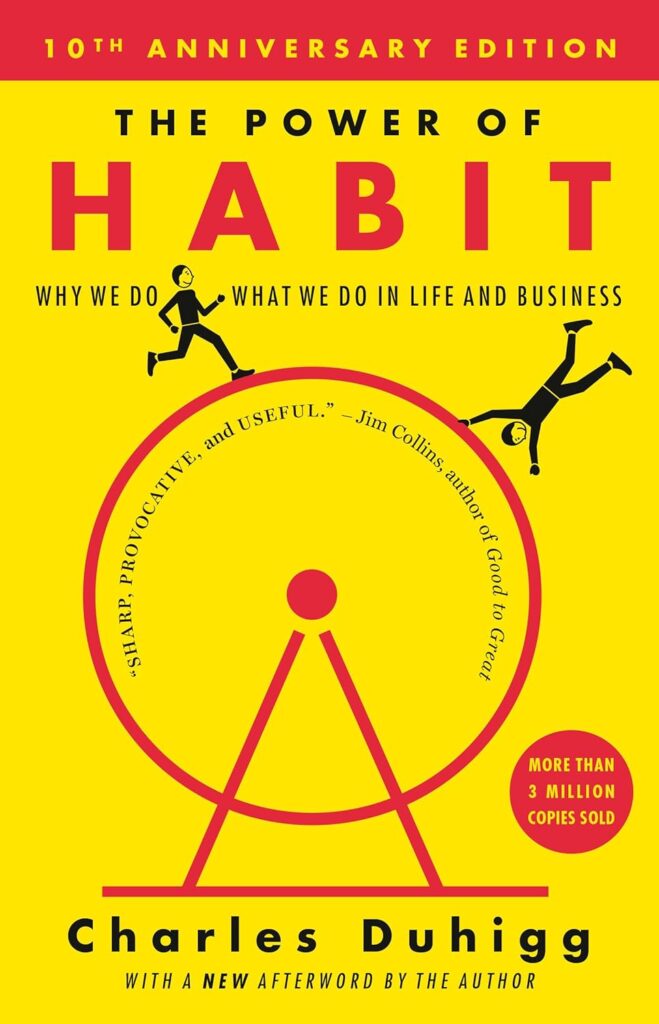
The Habit Revolution
Modern life operates largely on autopilot, with neuroscientists estimating that approximately 40% of your daily actions stem from habits rather than conscious decisions. Consequently, Charles Duhigg’s “The Power of Habit” emerges as a critical guide for understanding these unconscious behaviors that fundamentally shape your existence. Rather than relying on willpower alone, Duhigg provides a scientific framework for systematic change.
Moreover, the book systematically bridges the gap between neuroscience research and practical application, making complex brain studies accessible to general audiences. This approach differs significantly from typical self-help books that offer vague advice without scientific backing. Instead, Duhigg grounds every recommendation in peer-reviewed studies and real-world examples.
Current habit formation research validates Duhigg’s core assertions about neuroplasticity and behavioral change. According to neuroplasticity studies from 2025, it takes an average of 66 days to form a new habit, with individual variation ranging from 18 to 254 days depending on complexity and personal factors.
Habits are powerful, but delicate. They can emerge outside our consciousness, or can be deliberately designed. Charles Duhigg
The Habit Loop Science
The book’s foundation rests on Duhigg’s explanation of the neurological habit loop, a three-step pattern that your brain follows automatically: cue, routine, and reward. Furthermore, this framework reveals how habits develop in the basal ganglia, the brain region responsible for automatic behaviors, emotions, and pattern recognition. Understanding this neurological foundation becomes crucial for anyone attempting behavioral modification.
Additionally, the research demonstrates how habits conserve mental energy by allowing your brain to essentially go on autopilot during routine activities. Studies from Duke University show that habits comprise more than 40% of daily behaviors, freeing cognitive resources for more complex decision-making. This efficiency explains why breaking established patterns feels so mentally exhausting.
The book also explores how environmental cues trigger habitual responses before conscious thought occurs. These millisecond reactions bypass prefrontal cortex reasoning, making willpower-based approaches largely ineffective. Duhigg’s framework provides alternative strategies that work with, rather than against, these automatic processes.
Research from behavioral psychology laboratories consistently supports Duhigg’s three-component model, with subsequent studies expanding on his original framework to include craving as a fourth element that drives the loop’s continuation.
Golden Rule of Change
Moving beyond theoretical understanding, Duhigg introduces what he calls the “Golden Rule of Habit Change”—you cannot eliminate bad habits, but you can replace the routine while keeping the same cue and reward structure. This insight revolutionizes traditional approaches to behavioral modification that focus on elimination rather than substitution.
The Golden Rule works because it maintains the neurological pathways that make habits feel automatic while redirecting the middle component toward beneficial behaviors. For instance, if stress triggers afternoon snacking for a sugar reward, successful change involves replacing the snacking routine with a brief walk that provides the same stress-relief reward.
Furthermore, this principle explains why dramatic lifestyle overhauls typically fail while gradual substitutions succeed. The brain resists complete pattern disruption but readily accepts routine modifications that preserve familiar cue-reward structures. This biological preference for consistency becomes your ally rather than obstacle when properly understood.
The book provides numerous examples of successful habit replacement across various domains, from individual health behaviors to organizational culture changes, demonstrating the Golden Rule’s universal applicability.
Change might not be fast and it isn’t always easy. But with time and effort, almost any habit can be reshaped. Charles Duhigg
Keystone Habits
The book reveals how certain habits possess disproportionate influence over other behaviors, creating cascading improvements across multiple life areas. Duhigg terms these “keystone habits” because they naturally trigger positive changes in seemingly unrelated domains, making them particularly valuable for anyone seeking comprehensive life transformation.
Exercise serves as a classic keystone habit example, often leading to improved diet choices, better sleep patterns, increased productivity, and enhanced mood regulation. The neurological explanation involves exercise’s impact on brain chemistry, particularly increased production of BDNF (brain-derived neurotrophic factor) that enhances cognitive flexibility and decision-making.
Additionally, keystone habits create what Duhigg calls “small wins”—early victories that build confidence and momentum for tackling more challenging behavioral changes. These psychological victories prove crucial during the initial 66-day habit formation period when new behaviors feel effortful and unnatural.
The book’s most compelling keystone habit example involves Alcoa CEO Paul O’Neill’s focus on worker safety, which unexpectedly led to increased profits, improved communication, and enhanced organizational efficiency—demonstrating how strategic habit changes can transform entire systems.
Corporate Culture
Transitioning from individual to organizational behavior, Duhigg examines how companies leverage habit formation principles to influence both employee performance and consumer behavior. These case studies reveal the broader implications of understanding habitual patterns beyond personal development applications.
The Starbucks example illustrates how systematic habit training transforms customer service quality through what the company calls “willpower training routines.” Employees learn scripted responses that become automatic during stressful situations, maintaining service consistency even under pressure. This approach recognizes willpower as a muscle that strengthens through structured practice rather than hoping for innate customer service abilities.
Moreover, the book explores how companies like Target use predictive analytics to identify customers’ habit changes, particularly during life transitions when people become more receptive to new products. These insights have profound implications for understanding how environmental factors influence habit formation and change.
The corporate examples demonstrate that habit science applications extend far beyond individual behavior modification, affecting everything from workplace productivity to market research strategies and organizational culture development.
Social Movement Power
Perhaps most surprisingly, Duhigg applies habit framework analysis to social movements, using the Montgomery Bus Boycott as a case study for understanding how habits drive societal change. This analysis reveals how successful movements leverage existing social habits while creating new ones that sustain momentum over time.
The civil rights example demonstrates how habits operate at three levels: personal habits of individual participants, social habits within communities, and organizational habits that coordinate large-scale action. Research on social movements confirms that sustainable change requires modification at all three levels rather than relying solely on emotional motivation.
Furthermore, the book explains how social habits differ from individual habits in their reliance on weak ties—connections between diverse groups that facilitate information spread and norm adoption. These weak ties prove more influential for habit change than strong relationships because they expose people to different behavioral models.
This analysis provides valuable insights for anyone seeking to create change within organizations or communities, showing how habit science applies to collective behavior modification.
Score: 8/10
This book deserves high marks for its scientific rigor, practical applicability, and engaging storytelling approach to complex behavioral psychology concepts. Duhigg successfully translates neuroscience research into actionable strategies while maintaining academic credibility through extensive citations and case study verification.
The primary limitation involves occasional oversimplification of complex neurological processes, though this trades scientific precision for accessibility. Additionally, some readers may find the business case studies less engaging than personal transformation examples.

What Will You Learn
After reading “The Power of Habit,” you’ll understand:
- The three-component habit loop and how it operates in your brain
- Why willpower fails and what works better for lasting change
- How to identify cues and rewards that drive your automatic behaviors
- Real-world applications from individuals, organizations, and social movements
- The difference between keystone habits and regular behavioral patterns
- How to create accountability systems that support behavioral transformation
- Scientific principles behind successful habit formation and modification
- Why environmental design matters more than motivation for habit change
Reader Testimonials
The title may sound simple. The book is strong. Charles Duhigg tells of people who succeed at shedding some habits and bringing new ones to life. In these pages lie a powerful concept and illustrative stories. GskFn, verified purchaser
Success or Failure the Product of Habits. The author examines the habit loop and gives a thorough analysis of how it impacts our life and how we can use this influence to make positive changes. Thorough research was done in the writing of this book. S. Cranow, verified purchaser
I absolutely love this book! It is well written, clear and incredibly helpful to understand ourselves, and how our brain works. I use this new knowledge every day. Kindle Customer, verified purchaser
Pros and Cons
Pros:
- Scientifically grounded framework backed by extensive neuroscience research
- Engaging storytelling that makes complex concepts memorable and accessible
- Practical strategies applicable to personal, professional, and organizational contexts
- Real-world case studies demonstrating successful habit change across various domains
- Clear methodology for identifying and modifying existing behavioral patterns
Cons:
- Some case studies may oversimplify complex organizational or social factors
- Limited discussion of mental health conditions that affect habit formation
Habit Change Framework
The book provides a systematic approach to behavioral modification:
Habit Identification Process:
- Recognize the routine Notice automatic behaviors you want to change
- Identify the cue Determine what triggers the habitual behavior
- Understand the reward Discover what satisfaction the habit provides
- Experiment with rewards Test different activities that might provide similar satisfaction
Implementation Strategy:
- Keep the same cue Maintain environmental or temporal triggers
- Replace the routine Substitute new behavior that addresses same need
- Ensure similar reward Verify new routine provides expected satisfaction
- Practice consistently Repeat new pattern until it becomes automatic
Neuroscience Foundation
The book’s strength lies in Duhigg’s ability to explain complex brain research in accessible terms while maintaining scientific accuracy. He describes how habits form in the basal ganglia through a process called “chunking,” where the brain converts sequences of actions into automatic routines to conserve cognitive energy.
Contemporary neuroscience research validates Duhigg’s explanations about the balance between stimulus-driven habit systems and goal-directed conscious control systems. This research confirms that successful behavior change requires working with rather than against these neurological realities.
The book also addresses the role of dopamine in habit formation, explaining how anticipation of rewards drives behavioral repetition more than the rewards themselves. This insight proves crucial for understanding why some habits feel irresistibly compelling while others never fully develop.
Implementation Success
Readers consistently report success when applying Duhigg’s systematic approach to habit modification. The framework’s effectiveness stems from its recognition of automatic behavior patterns rather than relying solely on conscious willpower. This scientific grounding makes the methodology more reliable than approaches based purely on motivation or determination.
The book provides specific tools for habit analysis, including journaling techniques for identifying cues and rewards that might not be immediately obvious. Many readers discover that their assumed motivations for certain behaviors don’t match their actual psychological rewards, leading to more effective intervention strategies.
Success stories span from simple habit changes like establishing exercise routines to complex organizational transformations involving hundreds of employees. This scalability demonstrates the framework’s robustness across different contexts and applications.
Verdict
“The Power of Habit” stands as an essential resource for anyone seeking to understand and modify behavioral patterns in their personal or professional life. Duhigg’s integration of neuroscience research with compelling storytelling creates both an educational and entertaining reading experience that translates complex concepts into practical tools.
The book succeeds in demystifying habit formation while providing concrete strategies for implementing changes. Whether you’re struggling with personal habits, managing organizational culture, or simply curious about human behavior, this book offers valuable insights backed by scientific research and real-world validation.
Most importantly, “The Power of Habit” empowers readers with knowledge about their own behavioral patterns, transforming habit change from a mysterious process dependent on willpower into a systematic approach based on understanding how your brain actually works. This shift in perspective often proves more valuable than any specific habit modification technique.
The book’s lasting impact lies in its framework approach, teaching principles that readers can apply to virtually any behavioral change challenge throughout their lives rather than providing only situation-specific advice.
Video Credit: TEDx Talks / YouTube
Frequently Asked Questions
How long does it take to see results using Duhigg’s habit loop method?
Most readers report initial awareness of their habit patterns within the first week of applying Duhigg’s identification techniques. However, meaningful behavioral changes typically require 2-8 weeks of consistent practice, depending on the complexity of the habit being modified. The book emphasizes that habit change is a process rather than an event.
Simple substitutions like replacing afternoon snacking with a brief walk may feel natural within 2-3 weeks, while more complex changes involving multiple interconnected behaviors can take several months to fully establish. The key is maintaining consistency with the new routine while keeping the same cue and reward structure.
Does the book address habits related to technology and social media addiction?
While Duhigg wrote the book before the current social media landscape fully emerged, his framework applies directly to digital habits. The cue-routine-reward pattern works the same way whether the behavior involves checking email, scrolling social media, or playing mobile games. The challenge lies in identifying the actual psychological reward these activities provide.
Many readers successfully apply Duhigg’s principles to reduce screen time by identifying triggers (boredom, anxiety, transition moments) and finding alternative activities that provide similar rewards (social connection, entertainment, or cognitive stimulation) without the negative consequences.
Can the habit loop framework help with serious addictions?
Duhigg addresses addiction throughout the book, explaining how the habit loop becomes particularly powerful when combined with strong neurochemical rewards. However, he emphasizes that serious addictions often require professional treatment alongside habit modification techniques. The book’s approach works best as a complementary strategy rather than primary treatment.
The framework proves most effective for behavioral addictions and habit-based dependencies rather than chemical addictions that involve physical withdrawal symptoms. Many readers find the book helpful for understanding their addictive patterns, but clinical support remains essential for serious substance abuse issues.
How does the book’s advice apply to people with ADHD or other neurodevelopmental differences?
While Duhigg doesn’t specifically address ADHD, many readers with attention differences report success with his systematic approach. The habit loop framework can actually work better for ADHD brains because it reduces reliance on executive function and working memory that are often impaired in ADHD.
The key modifications involve creating more obvious environmental cues and immediate rewards to work with ADHD brain chemistry. Some readers find they need shorter habit chains or more frequent reinforcement than neurotypical individuals, but the basic framework remains applicable.
Are the business case studies in the book still relevant given how much corporate culture has changed?
The underlying principles Duhigg describes remain highly relevant even as specific business practices evolve. The Starbucks customer service training model, for example, has been widely adopted across service industries with consistent success. The Alcoa safety transformation demonstrates timeless leadership principles about culture change through strategic habit modification.
Contemporary research continues to validate organizational habit concepts, with recent studies on remote work culture change and digital workplace habits following patterns Duhigg identified. The specific examples may age, but the frameworks for understanding organizational behavior remain current and applicable.
Purchase: Get The Power of Habit on Amazon
Sources:
- Charles Duhigg Official Website
- Neuroscience School Habit Formation Research
- Science Direct Habit Research
- Medium Habit Loop Analysis
- Psychology Today Habit Neurobiology
Read More: