

Last updated on April 3rd, 2026 at 09:40 pm
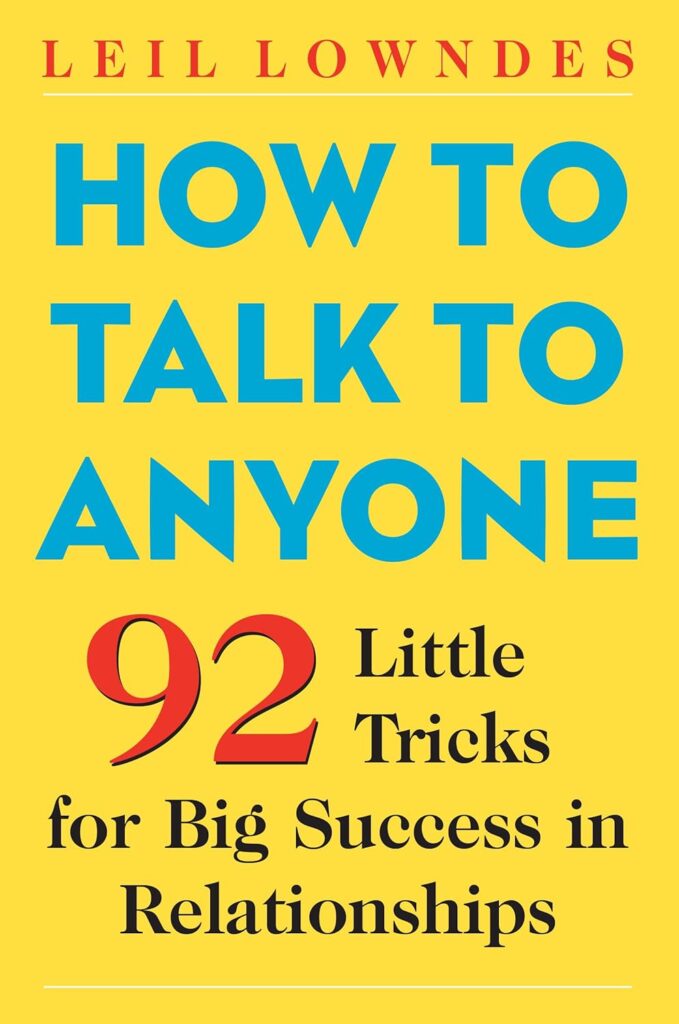
Your social success hinges on mastering one critical skill that most people struggle with daily. Leil Lowndes’ transformative bestseller “How to Talk to Anyone” delivers 92 practical techniques that unlock your ability to connect, influence, and thrive in any social or professional situation.
Does "How to Talk to Anyone" really deliver better conversation skills and social success? Absolutely. Lowndes provides research-backed communication techniques that transform awkward encounters into meaningful connections. Her 92 little tricks create measurable improvements in relationships, career advancement, and personal confidence within weeks of implementation.
The Communication Crisis
Modern society faces an unprecedented communication breakdown that damages relationships and stalls careers. Meanwhile, technology paradoxically connects us globally while isolating us interpersonally. The skills our grandparents learned naturally through face-to-face interaction have been lost in our digital age.
Furthermore, workplace communication statistics from 2025 reveal staggering costs of poor interpersonal skills. Companies lose $1.2 trillion annually due to communication failures, while 86% of employees blame workplace errors on ineffective collaboration and communication.
The gap between digital natives and traditional communication creates professional obstacles that can derail promising careers. Yet these challenges also present extraordinary opportunities for individuals who master timeless conversation principles. Those who develop authentic connection skills gain competitive advantages that technology cannot replace.
The way we communicate with others and with ourselves ultimately determines the quality of our lives. Tony Robbins
The Science Behind Connection
Lowndes builds her techniques on solid psychological research about human behavior and social dynamics. Rather than offering superficial small-talk tips, she explores the deeper mechanisms that create genuine rapport between individuals. Her approach integrates findings from neuroscience, behavioral psychology, and anthropology to explain why certain communication patterns work universally.
Additionally, the book addresses how first impressions form within seven seconds of meeting someone. Research from MIT demonstrates that trusting employees show 260% more motivation, 41% lower turnover rates, and 40% better performance metrics. These statistics underscore the business value of mastering interpersonal connection skills.
The author also examines nonverbal communication patterns that comprise 55% of all human interaction. Understanding these silent signals enables readers to read situations more accurately while projecting confidence and competence. This scientific foundation elevates the book above generic self-help advice to provide evidence-based improvement strategies.
First Impressions Revolution
Moving beyond surface-level charm, the book provides systematic approaches to creating memorable first encounters. The “Flooding Smile” technique demonstrates how timing your facial expressions creates deeper connection than generic pleasantries. Similarly, “Sticky Eyes” teaches maintaining appropriate eye contact that builds trust without causing discomfort.
These aren’t manipulation tactics but rather authentic ways to express genuine interest in others. The distinction becomes crucial because people instinctively detect insincerity while responding positively to legitimate warmth and attention. Mastering these subtle differences transforms how others perceive and remember your interactions.
The book also addresses body language fundamentals that communicate confidence before you speak. Proper posture, hand positioning, and spatial awareness create subconscious impressions that either enhance or undermine your verbal messages. These techniques prove especially valuable in professional networking situations where first impressions carry long-term consequences.
You never get a second chance to make a first impression. Will Rogers
Small Talk Mastery
Transitioning from initial contact to meaningful conversation challenges many people, particularly introverts and analytical personalities. Lowndes provides specific strategies for navigating these crucial moments when relationships either deepen or stagnate. Her “Be a Word Detective” technique helps identify conversation topics that genuinely interest your dialogue partner.
Moreover, the book reveals how successful networkers use “conversation openers” that invite engagement rather than creating dead-end exchanges. Instead of asking “How are you?” which typically generates automatic responses, you learn questions that spark authentic dialogue and reveal common interests or experiences.
The chapter on handling awkward silences becomes particularly valuable for socially anxious individuals. Rather than viewing quiet moments as failures, readers learn to use pauses strategically for emphasis while developing comfort with natural conversation rhythms. This shift in perspective eliminates much of the pressure that makes social interactions feel forced or unnatural.
Professional Impact Applications
The workplace applications of these communication skills generate measurable career benefits. Forbes research indicates that communication abilities remain your most valuable professional asset in 2025, despite technological advancement in automation and artificial intelligence.
Furthermore, the book addresses specific business scenarios like networking events, client meetings, and team collaborations. The “VIP Treatment” technique shows how making others feel important creates loyalty and opens opportunities that formal credentials alone cannot achieve. These relationship-building skills become increasingly valuable as companies prioritize emotional intelligence in leadership roles.
The author also explores telephone and digital communication adaptations of her face-to-face techniques. With 82% of knowledge workers requiring better remote communication skills, these chapters provide timely guidance for modern professional challenges.
The single biggest problem in communication is the illusion that it has taken place. George Bernard Shaw
Advanced Conversation Techniques
Beyond basic social skills, the book delves into sophisticated influence and persuasion strategies. The “Echoing” technique demonstrates how mirroring speech patterns and vocabulary creates subconscious rapport that enhances agreement and cooperation. This psychological principle works across cultures and personality types.
Additionally, Lowndes explains how to handle difficult conversations and challenging personalities without damaging relationships. Her approach focuses on understanding others’ perspectives while maintaining your own boundaries and objectives. These skills prove invaluable in sales, management, and conflict resolution situations.
The book also covers group dynamics and how individual conversation skills translate to larger social settings. Managing multiple relationships simultaneously requires different techniques than one-on-one interactions, and these chapters provide specific strategies for parties, meetings, and public speaking scenarios.
Digital Age Adaptations
Recognizing that modern communication spans multiple channels, the book addresses how traditional interpersonal skills apply to digital environments. Email tone, video conference presence, and social media interactions all benefit from understanding the psychological principles that govern human connection.
However, the author emphasizes that technology amplifies rather than replaces fundamental relationship skills. Virtual meetings still require reading nonverbal cues, while text-based communication demands greater precision in word choice and timing. The core principles remain constant even as delivery methods evolve.
The book also explores how digital natives can develop face-to-face skills that complement their technical fluency. This balanced approach prepares readers for professional environments that value both technological competence and interpersonal effectiveness.
Score: 8/10
This book earns a strong rating for its practical applicability, scientific foundation, and comprehensive coverage of social situations. Lowndes successfully translates complex psychological research into actionable techniques that produce measurable results for readers willing to practice consistently.
The main limitation involves occasional repetition of key concepts and some techniques that require significant personality adjustment for introverted readers. However, the book provides enough variety that most people can find approaches that align with their natural communication style.

What Will You Learn
After implementing “How to Talk to Anyone,” you’ll master:
- First Impression Optimization: Creating memorable initial encounters through timing, eye contact, and body language
- Small Talk Transformation: Converting superficial exchanges into meaningful conversations that build rapport
- Active Listening Techniques: Demonstrating genuine interest while gathering valuable information about others
- Influence and Persuasion: Using psychological principles ethically to gain agreement and cooperation
- Conflict Resolution: Handling difficult conversations while preserving relationships and achieving objectives
- Group Communication: Managing multiple relationships in social and professional settings
- Digital Adaptation: Applying interpersonal skills to virtual meetings, emails, and digital platforms
- Networking Excellence: Building professional relationships that create career opportunities and business growth
Reader Testimonials
“I picked up How to Talk to Anyone out of curiosity, not expecting much more than a few surface-level conversation starters. What I got was a treasure trove of immediately useful communication tools that have truly changed the way I engage with people—both personally and professionally.” Jorge & Carolina M, verified purchaser
“This was a quick and easy read that offered a lot of great tips to apply in your daily life! I have always struggle with being able to talk to people and hold a conversation and after reading this book I have been able to use the tips and trick to communicate better!” Ky, verified purchaser
“I’m horribly introverted and this book has been wonderful. It won’t change you into an extrovert but just reading the strategies has certainly given me a bit more confidence in talking with others.” Alan, verified purchaser
Pros and Cons
Pros:
- 92 specific techniques provide comprehensive coverage of social situations and challenges
- Scientific research foundation validates effectiveness of recommended approaches
- Practical examples and scenarios make techniques easy to understand and implement
- Applicable across personal relationships, professional networking, and business communications
- Organized format allows selective reading based on individual needs and interests
Cons:
- Some techniques require practice and personality adjustment that may feel unnatural initially
- Occasional repetition of core concepts throughout different chapters
Implementation Strategy
The book organizes its 92 techniques into logical categories for systematic skill development:
Part 1: First Impressions (Techniques 1-9)
- Master the “Flooding Smile” for authentic warmth
- Use “Sticky Eyes” to create connection through eye contact
- Apply “Epoxy Eyes” for sustained attention during conversations
Part 2: Small Talk Success (Techniques 10-23)
- Implement “Be a Word Detective” to find engaging topics
- Practice “Never the Naked City” to add context to basic questions
- Use “Never the Naked Job” to make career discussions interesting
Part 3: Big Talk Mastery (Techniques 24-37)
- Apply “The Broken Record” for important message emphasis
- Master “Echoing” to create subconscious rapport
- Use “Potty Training” to handle inappropriate comments gracefully
Part 4: VIP Communication (Techniques 38-51)
- Implement “Make Them a Star” to elevate others’ importance
- Practice “Grapevine Glory” to leverage social networks
- Apply “Business Card Technique” for professional networking
Communication Skills Statistics
Research demonstrates the measurable impact of improved interpersonal communication:
| Metric | Improvement | Source |
|---|---|---|
| Team Productivity | 64% increase | Business Leaders Survey 2025 |
| Employee Motivation | 260% higher | MIT Sloan Research |
| Customer Retention | 68% improvement | Project.co Communication Statistics |
| Workplace Errors | 86% reduction | Apollo Technical Research |
| Leadership Effectiveness | 72% enhancement | Pumble Communication Study |
These statistics validate the book’s central premise that communication skills generate measurable business and personal outcomes. Companies investing in employee communication training see substantial returns through improved productivity, reduced turnover, and enhanced customer relationships.
Verdict
“How to Talk to Anyone” delivers exceptional value for anyone seeking to improve their interpersonal effectiveness and social confidence. Lowndes combines psychological insight with practical techniques that work across diverse situations and personality types. The book’s strength lies in providing specific, actionable strategies rather than vague advice about being more social.
The 92 techniques offer enough variety that readers can select approaches that align with their communication style while gradually expanding their comfort zones. Whether you’re naturally outgoing or seriously introverted, you’ll find applicable strategies that enhance your ability to connect with others authentically.
Most importantly, the book addresses both personal and professional applications of communication skills. In an economy where 68% of customers switch companies due to poor communication, mastering these skills provides competitive advantages that technology cannot replace. The investment in developing interpersonal effectiveness pays dividends throughout your career and personal relationships.
The techniques work because they’re based on fundamental human psychology rather than temporary trends or cultural fads. This timeless foundation ensures the book remains relevant despite changing communication technologies and social norms.
Video Credit: BookWatch / YouTube
Frequently Asked Questions
Will these techniques work for introverts and socially anxious people?
The book specifically addresses introversion and social anxiety with techniques that feel authentic rather than forced. Many readers report that the strategies actually reduce social anxiety by providing structure and confidence in previously uncomfortable situations. The key is starting with techniques that align with your personality while gradually expanding your comfort zone.
Introverts particularly appreciate the “listening-focused” techniques that allow them to engage meaningfully without dominating conversations. The book recognizes that genuine connection often involves asking thoughtful questions and showing authentic interest rather than constant talking.
How long does it take to see results from implementing these techniques?
Most readers report noticeable improvements within 2-3 weeks of consistent practice, with significant changes becoming apparent after 6-8 weeks. However, results depend on how frequently you practice the techniques and which specific skills you focus on developing first.
The book’s modular structure allows you to start with techniques that address your most pressing communication challenges. Some readers focus on first impression skills for networking events, while others prioritize conflict resolution techniques for workplace situations.
Are these techniques considered manipulative or inauthentic?
The techniques focus on genuine interest in others rather than manipulation or deception. The book emphasizes building authentic relationships through better understanding and communication rather than trying to control or mislead people. This ethical foundation distinguishes Lowndes’ approach from manipulative sales tactics or superficial charm strategies.
Readers consistently report that implementing these techniques makes them feel more genuine in social interactions because they’re finally equipped with tools to express their authentic interest in others effectively.
Do these communication skills translate to virtual meetings and digital interactions?
While originally written for face-to-face communication, many techniques adapt well to virtual environments. The psychological principles underlying rapport-building and active listening remain constant regardless of communication medium. However, digital interactions require additional attention to vocal tone, visual presentation, and timing.
The book’s foundation in understanding others’ perspectives and showing genuine interest applies equally to video conferences, phone calls, and even written communications. Readers often find that mastering in-person skills actually improves their digital communication effectiveness.
Can these techniques help with public speaking and presentations?
Many of the interpersonal skills directly transfer to public speaking situations, particularly techniques for reading audience reactions, managing nervousness, and creating connection with groups. The confidence gained through improved one-on-one interactions often translates to greater comfort in front of larger audiences.
However, the book focuses primarily on interpersonal rather than public speaking skills. Readers seeking presentation-specific techniques may need additional resources, though the foundational communication principles provide valuable support for any speaking situation.
Purchase: How to Talk to Anyone on Amazon
Sources:
- Pumble Workplace Communication Statistics
- Forbes Communication Skills Career Asset
- Project.co Communication Statistics
- Notta Workplace Communication Statistics
- Market Inspector Communication Research
Read More: