

Last updated on February 1st, 2026 at 08:31 am
You’ve probably noticed AI is everywhere now. From ChatGPT to image generation tools, artificial intelligence is reshaping how people work and learn. If you’re considering getting into AI but aren’t sure whether to invest money or start free, you’re not alone, thousands of people face this exact question every month.
The choice between free and paid AI courses depends on your budget, learning style, and career goals. Free courses offer you access to quality education without financial risk, while paid courses typically provide certifications, deeper content, and job-ready skills. Both paths can lead to success, but understanding the differences helps you pick the right option.
This guide breaks down ten of the best AI courses available, both free and paid, so you can make an well-informed choice based on what you actually need.

Why Choose Between Them
The decision between free and paid AI courses isn’t straightforward. Both have real value, and your choice depends on several factors unique to your situation.
Free AI courses let you explore the field without financial commitment. You can test whether AI genuinely interests you before spending money. Many free courses come from legitimate platforms like Udemy, Coursera, Google, and university partners. But, free courses often lack personalized feedback, certificates that employers recognize, or hands-on projects with direct instructor support.
Paid AI courses typically offer structure, mentorship, and credentials. When you pay for a course, you often get lifetime access to materials, direct contact with instructors, and certificates that appear on your resume. Paid courses also tend to move at a faster pace with more rigorous assignments. The trade-off is cost, quality paid courses range from $300 to $2,000 or more.
Your timeline matters too. If you need skills quickly for a job application, a paid course with a set schedule might serve you better. If you’re learning for personal interest with no rush, free options work fine. Many learners actually combine both, starting with free courses to build basics, then investing in a paid specialization once they know their direction.
Video Credit: Sahil & Sarra / YouTube
The Best Free Courses
Free AI education has improved dramatically. You now have access to professional-level content from top institutions without paying anything.
Coursera Free Audit Options
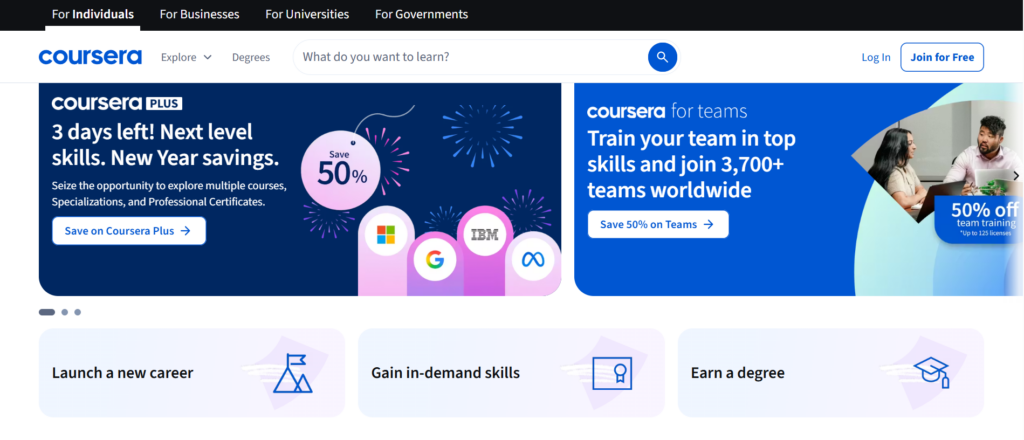
Coursera offers thousands of courses in audit mode, which means you can watch videos and read materials free. You won’t receive a certificate, but you get the same lectures as paying students.
Andrew Ng’s “Machine Learning” course and the “AI for Everyone” specialization are popular choices.
“This 3-course program, which should take you around 10 weeks / 2 months to complete, has been rated 4.9 out of 5 by over 4.8 million learners since its launch in 2012.” Source: Get Bridged
The audit option lets you move at your own pace without time pressure. Many people use this to determine if they want to pay for the full course with a certificate later. Coursera’s interface is clean, videos are well-produced, and the content is current.
Google’s AI Essentials
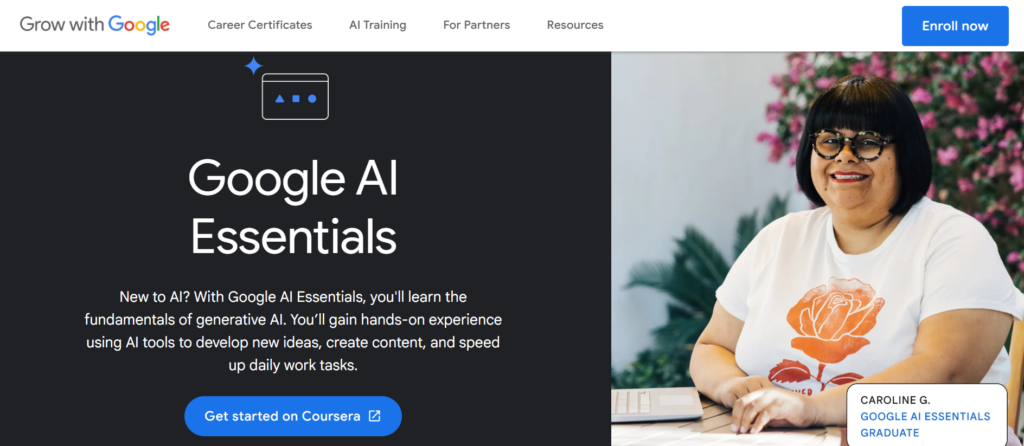
Google offers a free AI Essentials course designed for non-technical people. If you want to understand AI without coding, this course fits perfectly. It covers how AI works, practical uses, and ethical concerns. The course takes about 5 hours to complete and requires no prior knowledge.
You can learn about machine learning, neural networks, and generative AI in simple terms. Google’s materials are reliable since they come directly from an AI leader. This course is ideal if you want general AI knowledge rather than technical skills.
Fast.ai Practical Deep Learning
Fast.ai offers free courses focused on practical deep learning applications. Unlike theoretical courses, Fast.ai teaches you to build actual projects immediately. The teaching approach flips traditional learning, you start by creating something, then learn the theory behind it. You’ll need some Python knowledge to succeed, but beginners with coding experience can manage.
“Fast.ai has one of the best, most densely informative courses out there, and for the price: FREE, you absolutely cannot beat the value Jeremy Howard and the team has created.” Source: Medium
The community is active and helpful. Fast.ai courses are excellent if you want hands-on experience without paying, though they require more self-discipline than structured courses.
| Course | Best For | Time to Complete | Prerequisites |
|---|---|---|---|
| Coursera Audit | Structured learning | 3-6 months | None |
| Google AI Essentials | Non-technical overview | 5 hours | None |
| Fast.ai Deep Learning | Hands-on projects | 8-12 weeks | Python basics |
The Best Paid Courses
Paid courses offer value that justifies the investment for many learners. You get structure, support, and credentials that improve your professional profile.
Specialized Certifications and Depth
Paid courses let you dive deeper into specific AI areas. Coursera’s “Machine Learning Engineering for Production (MLOps)” and “Deep Learning Specialization” go beyond basics and teach you what companies actually need.
Andrew Ng’s Deep Learning Specialization costs around $400 for the full five-course series but gives you practical skills in neural networks, convolutional networks, and sequence models.
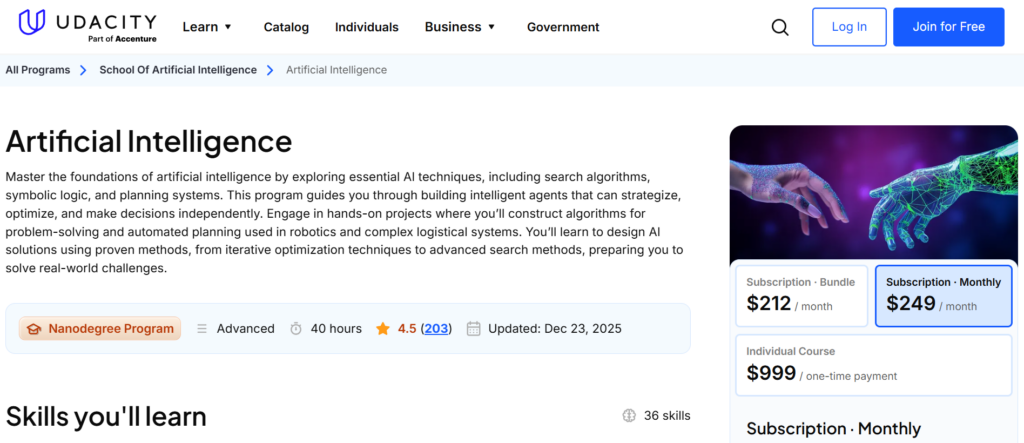
Udacity’s AI Engineer Nanodegree program (approximately $1,400) includes one-on-one mentor sessions and real-world projects. You create a portfolio that demonstrates your capabilities to employers.
“The Udacity digital marketing certification is mostly valuable for tech companies like Google, AT&T, or Amazon. This online learning platform is not accredited, so it is not recognized by universities. This is something you should keep in mind if you consider using Udacity’s programs.” Source: Career Karma
Industry-Recognized Credentials
When you complete a paid course, you earn a certificate from the institution offering it. Coursera certificates show on your profile and LinkedIn. Employers recognize Coursera specializations and Google Career Certificates more readily than informal completion badges.
Some paid courses go further, Google Cloud certifications actually appear as credentials in your professional accounts. This matters if you’re job hunting. A certificate proves you completed rigorous material, which carries weight in hiring decisions. Many people find the certificate value alone justifies the course cost.
Paid courses also offer structure through deadlines and graded assignments. This keeps you accountable and moving forward. If you struggle with self-motivation, paid courses with fixed schedules help you stay on track.
Choosing Your Right Path
Your decision should align with your actual situation, not what sounds impressive.
“The Stanford Certified Machine Learning course on Coursera is widely regarded as one of the best for anyone looking to enter the field of artificial intelligence. It offers rigorous training in foundational ML concepts like supervised learning, unsupervised learning, and reinforcement learning.” Source: UMU
Budget and Time Considerations
Calculate what you can realistically spend. If you have $500, that opens different options than $50. Be honest about your time commitment too. A paid course with weekly deadlines requires 10+ hours per week. If you can only study weekends, a self-paced free course might suit you better.
Consider the opportunity cost, is paying $1,000 to learn AI for three months worth it to you? For some, yes. For others, investing time in free courses makes sense.
Time investment differs between options. Free courses average 10-15 hours per week if you’re serious. Paid structured courses demand similar or more time but with deadlines keeping you focused. Fast-track paid bootcamps compress learning into 12 weeks but require full-time commitment. Choose based on your schedule and learning speed.
Skill Level and Career Goals
Your current skill level matters greatly. If you’ve never coded, start with free courses to build basics before paying. If you already code, paid specializations teach you AI-specific frameworks faster. Someone switching careers to AI might need the certification value of a paid course to convince employers.
Someone learning AI to improve their current job might be satisfied with free knowledge. Your goal determines everything.
Want a job in AI? Paid courses with certificates help. Want to understand AI for general knowledge? Free courses suffice.
Create a simple checklist:
- Do you need a recognized certificate?
- What’s your coding experience level?
- How many hours weekly can you commit?
- Is your goal employment, knowledge, or skill improvement?
- What’s your budget range?
Answer these honestly, and the right choice becomes clear.
Frequently Asked Questions
What is the main difference between free and paid AI courses?
Free AI courses let you learn without financial risk but typically lack certificates and instructor support. Paid AI courses offer structure, mentorship, credentials, and hands-on projects with instructor feedback, usually costing $300–$2,000, making them better for job-ready skills.
Are free AI courses from Coursera and Google actually good quality?
Yes. Coursera’s audit option provides the same lectures as paying students without certificates. Google AI Essentials is designed by AI leaders and covers practical applications. Both offer professional-level content from legitimate institutions, making them excellent for foundational learning.
How long does it take to complete an AI course?
Free courses vary: Google AI Essentials takes about 5 hours, while Coursera courses average 3–6 months. Paid specialized programs like Udacity’s Nanodegree take 8–12 weeks with full-time commitment. Timeline depends on course depth and your available hours weekly.
Do employers recognize free AI course certificates?
Free courses rarely provide employer-recognized certificates. Paid courses offer credentials that appear on LinkedIn and professional profiles, carrying more hiring weight. Coursera specializations and Google Career Certificates are widely recognized, justifying investment for job seekers.
Should I start with free or paid AI courses as a beginner?
Start with free courses to test your interest and build basics without risk. If you’ve never coded, begin with Google AI Essentials or Coursera audit options. Once committed, transition to paid specializations for deeper technical skills and recognized credentials.
What coding skills do I need before taking an AI course?
Google AI Essentials requires no coding knowledge. Coursera Machine Learning requires basic Python. Fast.ai Deep Learning demands Python fundamentals but teaches applications first. Choose courses matching your skill level—start non-technical if you’re a complete beginner.
Sources:
- Coursera – Andrew Ng’s Machine Learning Specialization
- Career Karma – Udacity Certificate Value
- Fast.ai Testimonials
- Google AI Skills Training
- Medium – Fast.ai Deep Learning Course Review
Read More: