

Your daily routines might be quietly sabotaging your biggest dreams. James Clear’s transformative book “Atomic Habits” reveals how microscopic changes compound into extraordinary results, fundamentally reshaping how millions approach personal transformation and goal achievement.
Does "Atomic Habits" actually work for lasting change? Absolutely. James Clear's scientifically-backed framework demonstrates how 1% daily improvements create remarkable transformations through four simple laws that make good habits inevitable and bad habits impossible. This book turns habit formation into a systematic, predictable process.
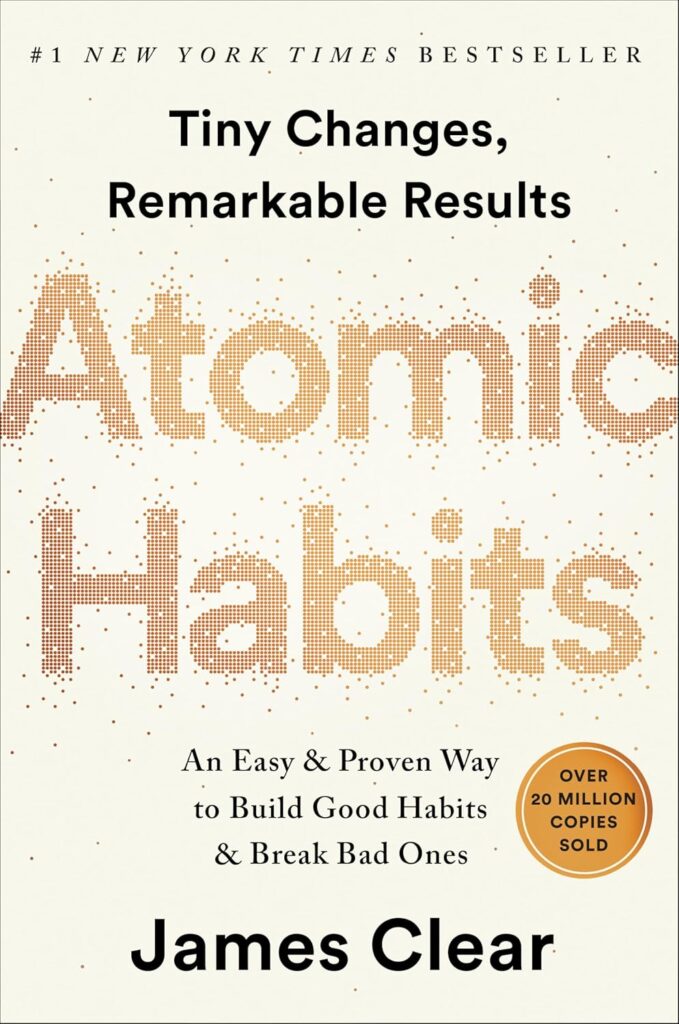
The 1% Revolution
The world has fundamentally misunderstood how change actually happens. Meanwhile, James Clear’s “Atomic Habits” arrives with a counterintuitive truth that challenges everything we’ve been taught about achievement. Clear dismantles the myth that massive success requires massive action, revealing instead how tiny improvements compound into extraordinary results.
Furthermore, Clear traces the mathematical power of marginal gains through compelling examples from British cycling to everyday personal transformation. His research demonstrates that getting just 1% better each day leads to being 37 times better after one year. This isn’t motivational fluff—it’s mathematical reality that most people completely overlook.
The current approach to change is fundamentally broken. According to habit formation research, most people focus on outcomes rather than systems, leading to temporary changes that inevitably fail. Clear’s framework addresses this systemic problem by targeting the underlying processes that create lasting transformation.
You do not rise to the level of your goals. You fall to the level of your systems. James Clear
Scientific Foundation
The book’s strength lies in Clear’s ability to synthesize decades of behavioral psychology research into actionable strategies. He draws from neuroscience, behavioral economics, and habit formation studies to create what he calls the “Four Laws of Behavior Change.” This framework transforms abstract scientific concepts into practical tools anyone can implement immediately.
Additionally, Clear explains the neurological basis of habit formation through the concept of “chunking.” Neuroscience research shows that habits form when the brain groups actions together to conserve mental energy. Understanding this process allows readers to consciously design habit loops that work with their brain’s natural tendencies rather than against them.
The author also addresses the psychology of identity change, arguing that lasting habits require shifts in self-perception. Rather than saying “I want to quit smoking,” Clear advocates for “I am not a smoker.” This subtle shift targets the deeper level of belief that drives behavior, creating more sustainable changes.
Clear’s background as a writer focused on habits and continuous improvement since 2012 lends credibility to his approach. Unlike many self-help authors, he builds his framework on established scientific research while acknowledging the limitations of current knowledge.
The Four Laws Decoded
Moving beyond theoretical understanding, Clear provides his trademark “Four Laws of Behavior Change” that serve as the book’s practical core. These laws create a systematic approach to habit formation: Make it Obvious, Make it Attractive, Make it Easy, and Make it Satisfying. Each law addresses a different aspect of the habit loop, creating multiple leverage points for change.
The first law, “Make it Obvious,” focuses on environmental design and cue recognition. Clear explains how successful habit formation often depends more on context than willpower. By strategically placing visual cues in your environment, you can trigger desired behaviors automatically without relying on motivation or memory.
The second and third laws work together to reduce friction and increase motivation. “Make it Attractive” leverages dopamine and temptation bundling, while “Make it Easy” eliminates barriers that prevent action. Clear’s famous “Two-Minute Rule” exemplifies this approach—any new habit should take less than two minutes to complete initially.
The final law, “Make it Satisfying,” addresses the challenge of delayed gratification. Since our brains are wired to prioritize immediate rewards, Clear provides strategies for creating instant satisfaction from behaviors that pay off long-term.
Identity-Based Habits
One of the book’s most powerful concepts is identity-based habit formation. Clear argues that most people approach change backwards by focusing on what they want rather than who they want to become. This fundamental misalignment explains why so many well-intentioned efforts fail despite initial enthusiasm.
The book reveals how every action serves as a vote for the type of person you believe yourself to be. Want to become a writer? The evidence is simple—do writers write? If you write consistently, even for just minutes daily, you accumulate proof of your writer identity. This proof strengthens your self-concept, making future writing more likely.
Clear also addresses how identity conflicts sabotage habit formation. If you see yourself as “not a morning person,” waking up early becomes an identity threat rather than a desired behavior. The book provides strategies for gradually shifting these identity beliefs through small, consistent actions that feel authentic rather than forced.
Every action you take is a vote for the type of person you wish to become. James Clear
Environment Design
The book dedicates significant attention to environmental design as a key factor in habit success. Clear explains how our physical surroundings shape behavior more powerfully than willpower or motivation. This insight has profound implications for anyone struggling to maintain consistent habits despite good intentions.
Environmental design operates on multiple levels, from arranging physical spaces to choosing social contexts. Clear provides specific strategies for “choice architecture”—designing environments that make good choices easier and bad choices harder. Want to read more? Place books throughout your living space and hide your phone in another room.
The author also examines social environment’s impact on habit formation. Research shows that we unconsciously adopt behaviors from our social groups, making peer influence a powerful tool for change. Clear recommends joining communities where your desired behavior is the norm rather than the exception.
This environmental focus differentiates “Atomic Habits” from willpower-based approaches that inevitably fail under pressure. By changing your context rather than fighting your natural tendencies, habit formation becomes significantly easier and more sustainable.
The Habit Stack Method
Clear introduces “habit stacking” as one of his most practical techniques for building new behaviors. This method involves linking new habits to established routines, leveraging existing neural pathways to create automatic behavioral chains. The formula is simple: “After I [current habit], I will [new habit].”
The power of habit stacking lies in its use of existing cues that already trigger automatic behavior. Rather than relying on motivation or memory, you attach new behaviors to actions you already perform consistently. After I pour my morning coffee, I will write one paragraph. After I sit down for dinner, I will share one thing I’m grateful for.
Successful habit stacking requires careful selection of anchor habits. Clear explains that the best anchors are highly specific, occur at consistent times, and happen naturally in your routine. Vague anchors like “after lunch” are less effective than precise ones like “after I put my lunch plate in the dishwasher.”
The author also addresses common habit stacking mistakes, such as choosing unrealistic anchor habits or stacking too many behaviors at once. Like compound interest, habit stacking works best when you start small and build gradually over time.
Score: 9/10
This book deserves an exceptional rating for its practical framework, scientific backing, and transformative impact on readers worldwide. Clear successfully bridges the gap between behavioral science and everyday application, making complex psychological concepts accessible and immediately actionable.
The only minor drawback is occasional repetition of key concepts, though this reinforcement often helps cement important ideas. Some readers might also find the focus on small changes initially underwhelming compared to dramatic transformation promises in other self-help books.

What Will You Learn
After reading “Atomic Habits,” you’ll understand:
- The four laws of behavior change and how to apply them systematically
- Why focusing on systems beats focusing on goals for lasting change
- How to design environments that make good habits inevitable
- The psychology of identity change and why it matters for habit formation
- Practical techniques like habit stacking and the two-minute rule
- How to break bad habits using inversion of the four laws
- The role of accountability and measurement in habit maintenance
- Why small improvements compound into extraordinary results over time
Reader Testimonials
This book changed my sleeping habits. It is very informative and helps me think differently about habits, and I now get much better sleep. My book group read it too and everyone felt the same. Elizabeth S. Hazard, verified purchaser
Updated review after 100 days building small yet lasting habits. Today, February 15th, after applying James’s system for 100 days on a few tiny habits, I feel compelled to share updates with you because they have sincerely worked. Haical Sajovic Haddad, verified purchaser
This book is different from others in the way it covers an enormous amount of ground in the larger area of self-improvement while seamlessly tying all these ideas back into the central theme of habits. Tom Venuto, Author of Burn the Fat, Feed The Muscle
Pros and Cons
Pros:
- Evidence-based framework grounded in behavioral psychology research
- Practical strategies that can be implemented immediately
- Clear, engaging writing style that makes complex concepts accessible
- Comprehensive system addressing both habit formation and elimination
- Focuses on sustainable systems rather than unsustainable willpower
Cons:
- Some readers may find the emphasis on small changes initially underwhelming
- Occasional repetition of key concepts throughout the book
- Limited discussion of handling significant life disruptions to established habits
Implementation Strategy
The book provides a systematic 12-step approach to habit transformation:
- Start ridiculously small Use the two-minute rule to overcome initial resistance
- Focus on consistency over performance Show up every day, even imperfectly
- Use habit stacking Attach new habits to established routines
- Design your environment Make good choices easier and bad choices harder
- Track your habits Use visual measurement to maintain awareness
- Never miss twice Recover quickly from inevitable setbacks
- Focus on identity Ask “What would a [desired identity] do?”
- Optimize for your natural tendencies Work with your personality, not against it
- Use accountability systems Share your commitments with others
- Celebrate small wins Create immediate satisfaction for long-term behaviors
- Review and adjust regularly Fine-tune your approach based on results
- Be patient with the process Trust compound growth over time
The Compound Effect Explained
Clear dedicates substantial attention to explaining why atomic habits work through compound interest principles. Just as money grows exponentially through compound interest, small behavioral improvements accumulate into remarkable results over time. This mathematical reality explains why many people abandon habit changes too early—the results aren’t immediately visible.
The author provides compelling visualizations of compound growth, showing how 1% daily improvement leads to 37x better results after one year, while 1% daily decline leads to near zero. This stark contrast illustrates why consistency matters more than intensity for long-term success.
Recent habit formation studies continue to validate Clear’s compound improvement thesis, showing that sustainable changes happen through consistent small actions rather than dramatic overhauls. This research supports the book’s central thesis that atomic habits create atomic results.
Habit Formation Timeline
The book addresses a common question: how long does it take to form a new habit? Clear cites research showing that on average, it takes 66 days for new behaviors to become automatic, though this varies significantly based on the complexity of the behavior and individual differences.
More importantly, Clear emphasizes that habit formation isn’t about reaching a finish line but creating an ongoing system of improvement. Rather than counting days until a habit is “formed,” focus on building identity evidence through consistent action. Each repetition strengthens both the neural pathway and your sense of self.
The author also explains how habits move through different phases: initial enthusiasm, inevitable decline, and eventual automaticity. Understanding this pattern helps readers navigate the predictable challenges of habit formation without abandoning their efforts during difficult periods.
Verdict
“Atomic Habits” stands as essential reading for anyone serious about creating lasting personal change. Clear’s systematic approach transforms habit formation from a matter of willpower into a learnable skill set, making personal transformation accessible to anyone willing to start small and stay consistent.
The book succeeds in providing both the why and the how of habit change. Clear’s scientific explanations satisfy readers who want to understand the underlying mechanisms, while his practical strategies give immediate tools for implementation. This combination of depth and practicality explains the book’s extraordinary popularity and sustained impact.
Most importantly, “Atomic Habits” shifts the conversation from dramatic transformation to sustainable systems. In a culture obsessed with quick fixes and overnight success, Clear offers a refreshing alternative that actually works. By focusing on process over outcomes and systems over goals, readers develop capabilities that extend far beyond any single habit or goal.
The book’s lasting value lies in its framework approach. Rather than prescribing specific habits, Clear teaches principles that readers can apply to any area of life. Whether you want to improve health, career, relationships, or personal growth, the four laws provide a reliable roadmap for change.
Sleep Is Your Superpower | Matt Walker | TED
Video Credit: APB Speakers / YouTube
Frequently Asked Questions
Is “Atomic Habits” suitable for people who have tried and failed at habit change before?
Absolutely. This book specifically addresses why previous attempts at habit change fail and provides alternative approaches that work with human psychology rather than against it. Clear’s framework acknowledges that willpower is unreliable and instead focuses on environmental design and systems thinking that make success more likely.
Many readers report that “Atomic Habits” finally helped them understand why their previous efforts failed. The book’s emphasis on starting incredibly small removes the intimidation factor that causes many people to abandon new habits after a few weeks.
How long does it take to see results using the atomic habits approach?
Results depend on your definition of success and the specific habits you’re building. Many readers report feeling more confident about their ability to change within the first week of implementation. Visible outcomes from habit changes typically become apparent within 2-8 weeks, depending on the behavior.
However, Clear emphasizes that the most important result is the identity change that happens through consistent action. This shift in self-perception often occurs faster than external results and provides the foundation for long-term success. Focus on becoming the type of person who does X rather than just doing X.
Does the book address breaking bad habits as effectively as building good ones?
Yes, Clear provides a comprehensive approach to habit elimination using the “inversion” of his four laws: Make it Invisible, Make it Unattractive, Make it Difficult, and Make it Unsatisfying. He explains that breaking bad habits often requires environmental changes and substitution strategies rather than pure elimination.
The book emphasizes that nature abhors a vacuum—simply trying to stop a behavior without replacing it usually fails. Clear provides strategies for identifying the underlying need that bad habits fulfill and finding healthier ways to meet those needs.
Can the atomic habits approach work for major life changes or is it only for small improvements?
The atomic habits approach is specifically designed to create major life changes through small, consistent actions. Clear argues that most people overestimate what they can accomplish in the short term but underestimate what’s possible over years of consistent effort. Major transformations happen through the compound effect of tiny improvements.
The book includes examples of significant life changes achieved through atomic habits, from weight loss and fitness to career advancement and skill development. The key is maintaining perspective on the long-term trajectory rather than expecting immediate dramatic results.
How does “Atomic Habits” compare to other popular self-help books?
“Atomic Habits” distinguishes itself through its systematic, science-based approach and focus on practical implementation. While many self-help books provide motivation or theory, Clear offers a specific framework that readers can apply immediately to any habit they want to develop or eliminate.
The book’s emphasis on systems over goals also sets it apart from achievement-focused approaches. Rather than promising quick fixes or dramatic transformations, Clear provides tools for sustainable, long-term change that compound over time. This approach tends to produce more lasting results than motivation-based methods.
Purchase: Get Atomic Habits on Amazon
Sources:
- James Clear’s Official Website
- Neuroscience Foundation on Habit Formation
- Scientific Research on Habit Formation Timeline
- The Science of Building Habits That Stick
- Medium Article on Atomic Habits in 2025
Read More: