

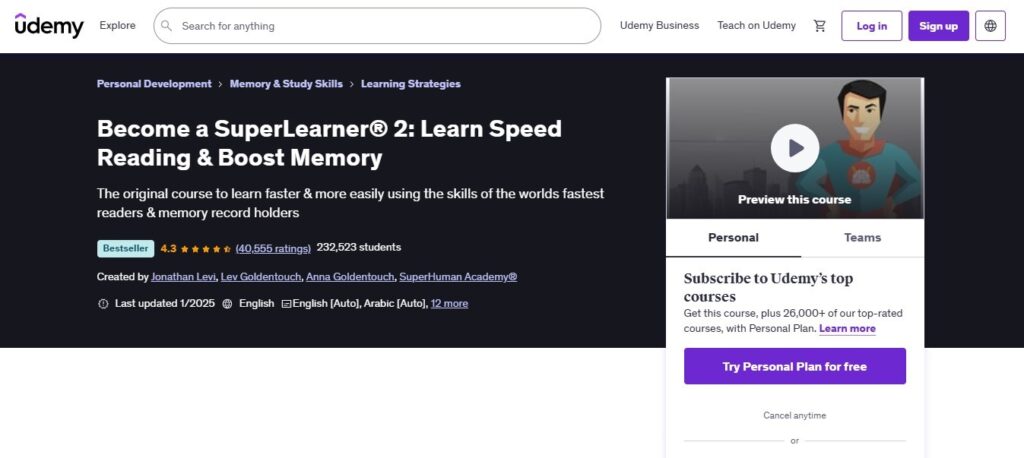
Jonathan Levi’s SuperLearner course promises to transform your learning abilities through speed reading, memory enhancement, and accelerated learning techniques. With over 100,000 students enrolled, this comprehensive program claims to help you absorb information faster than ever before.
The Become a SuperLearner 2 course effectively teaches speed reading fundamentals, memory palace techniques, and learning acceleration strategies through structured lessons and practical exercises. While the content delivers valuable skills for information retention and processing speed, results depend heavily on consistent practice and individual learning styles.
Course Structure
The SuperLearner 2 course spans approximately 11 hours of video content divided into logical sections that build upon each other progressively. Jonathan Levi organizes the material to take you from basic concepts to advanced techniques systematically.
The course begins with foundational principles about how your brain processes and retains information. Levi explains the science behind accelerated learning, drawing from neuroscience research to justify the techniques you’ll learn throughout the program.
Subsequently, the curriculum transitions into speed reading fundamentals, teaching you to overcome subvocalization and expand your visual processing capabilities. These early modules establish the groundwork for more advanced techniques introduced later.
The memory training section forms the course’s core, introducing the method of loci (memory palace technique) and various mnemonic devices. Levi provides step-by-step instructions for building and navigating mental storage systems.
Additionally, the program includes modules on note-taking optimization, focus enhancement, and habit formation. These supplementary topics support the primary learning techniques by addressing common obstacles students face.
The final sections focus on practical application across different subjects, from language learning to technical materials. This breadth ensures you can apply the techniques regardless of your specific learning goals.
Each module includes downloadable resources, exercise sheets, and bonus materials that reinforce the video content. The comprehensive support materials help bridge the gap between theoretical understanding and practical implementation.
Teaching Quality
Jonathan Levi brings extensive credibility to the course through his background in cognitive science and personal learning achievements. His presentation style balances scientific explanation with practical demonstration effectively.
The video production quality meets professional standards with clear audio, crisp visuals, and well-organized content delivery. Levi uses visual aids, animations, and real-world examples to illustrate complex concepts accessibly.
However, Levi’s teaching pace occasionally feels rushed, particularly when introducing intricate memory techniques. Some students might benefit from slower explanation of complex methodologies, though the ability to replay sections mitigates this concern.
The course incorporates guest experts who contribute specialized knowledge in areas like neuroscience and educational psychology. These expert perspectives add credibility and depth to the core content.
Furthermore, Levi provides personal anecdotes and case studies that demonstrate how the techniques apply in real-world scenarios. These examples help students understand practical applications beyond theoretical knowledge.
The teaching methodology emphasizes hands-on practice through guided exercises and progressive skill-building activities. This experiential approach helps students develop competency rather than just conceptual understanding.
Effective learning requires both understanding the cognitive science behind memory formation and consistent practice of proven techniques. Journal of Educational Psychology
The course materials include multiple learning modalities to accommodate different learning preferences, from visual demonstrations to audio reinforcement and written exercises.
Content Depth
The SuperLearner 2 course covers an impressive breadth of learning enhancement techniques, though the depth varies across different topics. The memory training components receive the most thorough treatment with detailed explanations and extensive practice opportunities.
Speed reading instruction goes beyond simple technique demonstration to address common misconceptions and provide troubleshooting guidance. Levi explains why traditional speed reading methods often fail and how his approach differs.
The memory palace methodology receives comprehensive coverage, including historical context, scientific backing, and step-by-step construction guidelines. Students learn to create, populate, and navigate complex memory systems effectively.
Moreover, the course addresses learning optimization from multiple angles, covering physical preparation, mental state management, and environmental factors that influence cognitive performance. This holistic approach distinguishes it from narrowly focused alternatives.
The note-taking and information organization sections provide practical frameworks for capturing and structuring knowledge effectively. These skills complement the memory techniques by improving initial information processing.
Key learning techniques covered include:
- Memory palace construction for long-term information storage
- Speed reading strategies that maintain comprehension
- Spaced repetition systems for optimal retention timing
- Active recall methods for strengthening memory pathways
- Focus enhancement techniques for improved concentration
The course also explores learning transfer principles, helping students apply techniques across different subjects and contexts. This versatility increases the value proposition for diverse learners.
However, some advanced topics receive relatively brief treatment, potentially leaving students wanting more detailed instruction on specialized applications.
Practical Application
The course emphasizes practical implementation through structured exercises and real-world application opportunities. Each major technique includes guided practice sessions that help students develop proficiency gradually.
The memory palace exercises start with simple examples before progressing to complex information storage challenges. This scaffolded approach helps students build confidence while developing increasingly sophisticated skills.
Speed reading practice includes timed exercises with comprehension checks to ensure students maintain understanding while increasing processing speed. These assessments provide objective feedback on improvement progress.
Additionally, the course provides templates and frameworks for applying techniques to specific subjects like language learning, professional development, and academic study. These practical tools bridge the gap between technique mastery and real-world application.
The program includes tracking sheets and progress measurement tools that help students monitor their development objectively. This data-driven approach provides motivation and identifies areas needing additional attention.
Furthermore, Levi addresses common implementation challenges such as maintaining motivation, overcoming plateaus, and adapting techniques to individual learning styles. These realistic considerations prepare students for obstacles they might encounter.
| Technique | Practice Time Required | Difficulty Level | Real-World Applications |
|---|---|---|---|
| Memory Palace | 2-4 weeks | Intermediate | Academic study, professional training |
| Speed Reading | 1-2 weeks | Beginner | Research, professional reading |
| Active Recall | 1 week | Beginner | Test preparation, skill development |
| Spaced Repetition | Ongoing | Intermediate | Language learning, fact retention |
| Focus Training | 2-3 weeks | Intermediate | Work productivity, study sessions |
The practical components also include troubleshooting guides for common problems students encounter when implementing the techniques in their daily routines.
Student Outcomes
Research on accelerated learning techniques suggests that structured training programs can significantly improve learning efficiency when students actively engage with the material. The SuperLearner 2 course incorporates many evidence-based strategies that cognitive science has validated as effective.
Student testimonials and progress reports indicate varied but generally positive outcomes, with many reporting substantial improvements in reading speed and information retention. However, individual results depend heavily on practice consistency and technique application.
The course’s effectiveness appears strongest for students who commit to regular practice and apply the techniques across multiple contexts. Those who complete exercises sporadically or fail to integrate techniques into daily routines see more limited benefits.
Additionally, the program works best for learners who can adapt the techniques to their individual cognitive styles rather than applying them rigidly. The most successful students customize the approaches based on their specific needs and preferences.
The memory palace technique receives particularly positive feedback from students dealing with large volumes of factual information, such as medical students and professional certification candidates.
Furthermore, students report that the course’s impact extends beyond the specific techniques taught, often leading to improved overall study habits and learning strategies. This broader influence amplifies the course’s value proposition.
Memory enhancement training shows the greatest benefits when students practice consistently and apply techniques to personally relevant material. Cognitive Science Research Institute
However, some students struggle with the time investment required to develop proficiency, particularly with more complex techniques like advanced memory palace construction.
Technology and Tools
The course leverages modern e-learning technology effectively, providing students with interactive exercises, downloadable resources, and multimedia content that enhances the learning experience. The platform’s user interface facilitates easy navigation and progress tracking.
Levi incorporates digital tools and apps that complement the core techniques, including spaced repetition software recommendations and focus training applications. These technology integrations extend the course’s utility beyond the video content.
The downloadable materials include practice sheets, reference guides, and implementation checklists that students can use independently. These resources support ongoing development after course completion.
Moreover, the course includes lifetime access with periodic updates that incorporate new research findings and technique refinements. This ongoing development ensures the content remains current and valuable.
The mobile-friendly format allows students to access content and practice exercises across different devices, supporting flexible learning schedules and on-the-go review sessions.
Additionally, the course platform includes community features where students can share experiences, ask questions, and receive peer support. This social element helps maintain motivation and provides troubleshooting assistance.
However, some students might prefer more sophisticated interactive elements or gamification features that could enhance engagement and practice motivation.
The technology components generally support rather than distract from the core learning objectives, maintaining focus on skill development rather than platform complexity.
Value Proposition
The SuperLearner 2 course offers significant value compared to traditional learning enhancement alternatives, particularly considering the comprehensive content coverage and lifetime access provision. The investment represents a fraction of what individual tutoring or specialized training programs typically cost.
When compared to academic speed reading courses, the program provides similar technique instruction plus additional memory enhancement and learning optimization strategies. This broader scope increases the overall value proposition for students seeking comprehensive learning improvement.
The course pricing reflects current Udemy market standards while delivering content quality that justifies the investment. Frequent promotional pricing makes the program accessible to students with varying budget constraints.
Additionally, the lifetime access model allows students to revisit content as needed and benefit from future updates without additional cost. This long-term value distinguishes the program from time-limited alternatives.
The practical skills developed through the course can provide ongoing benefits across academic, professional, and personal learning contexts. This transferability amplifies the return on investment over time.
Furthermore, the money-back guarantee period reduces financial risk while allowing students to evaluate the program’s suitability for their specific needs and learning styles.
However, students should consider the time investment required to achieve meaningful results, as technique mastery demands consistent practice beyond the initial course completion.
The value ultimately depends on students’ commitment to implementing the techniques and their specific learning improvement goals.
Pros and Cons
Pros:
- Comprehensive coverage of multiple learning enhancement techniques
- Scientific backing for strategies and methodologies taught
- High-quality video production with clear instruction
- Extensive practice exercises and implementation support
- Lifetime access with periodic content updates
- Practical tools and templates for real-world application
- Money-back guarantee reduces purchase risk
- Suitable for diverse learning goals and contexts
Cons:
- Requires significant time investment for technique mastery
- Some advanced topics receive limited coverage depth
- Fast-paced instruction may challenge some learning styles
Overall Rating
Score: 8.2/10
The Become a SuperLearner 2 course delivers substantial value for students seeking to enhance their learning capabilities through proven techniques and structured instruction. The comprehensive content, scientific backing, and practical focus create an effective learning enhancement program.
While the course requires significant commitment and practice to achieve optimal results, the techniques taught provide genuine benefits for information processing and retention when properly implemented.
Verdict
Jonathan Levi’s SuperLearner 2 course represents one of the most comprehensive learning enhancement programs available on Udemy, combining scientific rigor with practical application in an accessible format. The course succeeds in teaching valuable techniques that can genuinely improve learning efficiency.
For students willing to invest time and effort in developing these skills, the program offers excellent value and the potential for lasting learning improvement. The lifetime access and comprehensive content make it a worthwhile investment for serious learners.
However, students seeking quick fixes or those unwilling to practice consistently may find limited value. The course works best for motivated individuals who understand that learning enhancement requires sustained effort and technique refinement.
The program’s greatest strength lies in its evidence-based approach and comprehensive technique coverage. Its main limitation is the requirement for significant practice commitment that some students may find challenging to maintain.
Video Credit: Udemy Business / YouTube
Frequently Asked Questions
How long does it take to see results from the SuperLearner techniques?
Most students begin noticing improvements in reading speed within the first week of consistent practice, though significant gains typically require 2-3 weeks of regular application. Memory palace construction shows results more gradually, with basic proficiency developing over 3-4 weeks of dedicated practice.
The speed reading techniques often provide the quickest observable benefits, as students can measure words-per-minute improvements objectively. However, maintaining comprehension while increasing speed requires ongoing practice and refinement of the techniques taught in the course.
Memory enhancement results vary more significantly between individuals, depending on prior experience with mnemonic techniques and the complexity of information being memorized. Students working with highly structured information like vocabulary or facts typically see faster progress than those dealing with abstract concepts.
Is the course suitable for students with learning disabilities?
The SuperLearner 2 course can benefit students with certain learning disabilities, particularly those affecting traditional reading and memory processes. The visual and spatial techniques taught may provide alternative pathways for information processing that bypass some learning challenges.
However, students with specific learning disabilities should consult with educational specialists before relying solely on these techniques. The course works best as a supplement to rather than replacement for specialized educational support and accommodations.
Some techniques like memory palaces have shown particular success with students who have difficulty with traditional rote memorization, as they leverage spatial and visual processing strengths that may be less affected by certain learning disabilities.
Can you apply these techniques to language learning effectively?
The course specifically addresses language learning applications, with dedicated sections on vocabulary acquisition and language retention strategies. The memory palace technique proves particularly effective for building vocabulary and remembering grammatical structures in new languages.
Speed reading techniques help with processing foreign language texts more efficiently, though students must balance speed with comprehension when reading in non-native languages. The course provides guidance on adapting techniques for different proficiency levels.
The spaced repetition principles taught in the course align well with language learning best practices, helping students maintain vocabulary and grammar knowledge over time. Many language learning apps incorporate similar principles that complement the course techniques.
Do you need any special equipment or software to complete the course?
The SuperLearner 2 course requires no special equipment beyond a computer or mobile device for accessing the video content. All techniques can be practiced using standard materials like paper, pens, and books for reading practice.
The course recommends several apps and software tools that can enhance practice and application, but these are optional supplements rather than requirements. Students can develop proficiency using only the techniques and principles taught without additional technology purchases.
Some students find that specific apps for spaced repetition or focus training help maintain consistent practice, but the core techniques remain effective when applied manually. The course provides guidance on both high-tech and low-tech implementation approaches.
How does this course compare to reading speed reading books or other learning resources?
The SuperLearner 2 course offers more comprehensive coverage than most speed reading books, combining multiple learning enhancement techniques in a structured progression. The video format allows for demonstration and visual explanation that text-based resources cannot provide.
Traditional speed reading books often focus narrowly on reading techniques without addressing memory enhancement or learning optimization. This course’s broader scope provides more versatile skills that apply across different learning contexts and challenges.
The interactive exercises and practice opportunities in the course exceed what most books provide, though dedicated students can achieve similar results through disciplined self-study using quality written resources. The course’s main advantage lies in its structured approach and multimedia instruction format.
Sources:
- Cognitive Science Research on Memory Enhancement
- Educational Psychology Learning Strategies
- Journal of Applied Psychology Speed Reading Research
- Memory Palace Technique Effectiveness Studies
- Accelerated Learning Methods Research
Read More: