

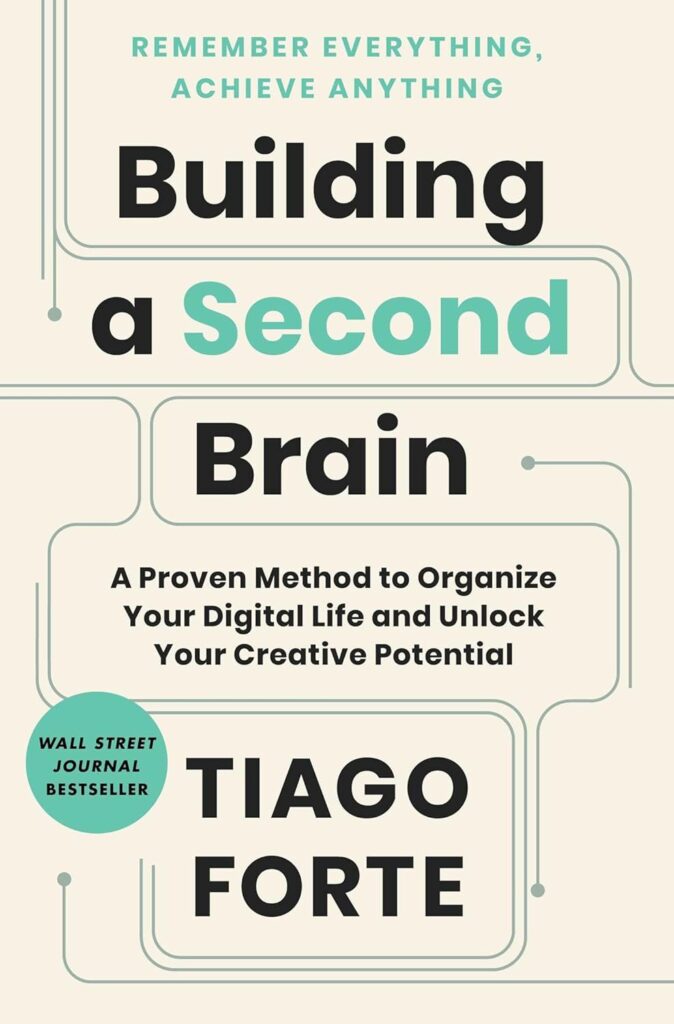
Tiago Forte’s Building a Second Brain hit shelves in 2022 and quickly became the go-to manual for anyone drowning in digital information. The book promised a system, CODE (Capture, Organize, Distill, Express), that would turn your scattered notes, bookmarks, and screenshots into a personal knowledge engine. Four years later, with AI assistants embedded in nearly every productivity app, you’re right to wonder if the book’s framework still holds weight.
Yes, ‘Building a Second Brain’ is still relevant in 2026, but with caveats. The foundational philosophy, externalize your thinking, organize for action, and resurface ideas when you need them, remains sound. But, the specific tooling recommendations and some manual workflows the book champions have been partially automated or outright replaced by AI-powered features in apps like Notion AI, Mem, and Microsoft Copilot. You’ll get the most value from the book if you treat it as a mindset guide rather than a step-by-step software tutorial.
This article stress-tests the book’s core ideas against the current productivity landscape. You’ll learn exactly where the framework still delivers ROI, where it falls short, and whether it deserves a spot on your reading list in 2026.
The Core Ideas Behind Building a Second Brain
At its heart, Building a Second Brain argues that your biological brain is terrible at storage but brilliant at creative thinking. Forte’s solution is to offload information capture and retrieval to a digital system so your mind can focus on synthesis and decision-making. The entire methodology rests on a four-step framework called CODE:
- Capture – Save only what resonates. Don’t hoard everything: be selective about what enters your system.
- Organize – Sort information by project or goal using the PARA method (Projects, Areas, Resources, Archives).
- Distill – Summarize notes progressively so the key insight is immediately visible.
- Express – Turn stored knowledge into tangible output, blog posts, presentations, strategies, decisions.
The PARA organizational structure deserves special attention because it’s the piece most people either love or struggle with. Instead of organizing by topic (like a librarian), you organize by actionability. A note about “negotiation tactics” doesn’t go into a “Business” folder. It goes into whichever active project needs it, say, “Q3 Vendor Contract Renewal.” This shift from topic-based to project-based filing is genuinely useful and still holds up.
Forte also introduced the concept of “intermediate packets”, small, reusable chunks of work like outlines, drafts, and research summaries that you can remix across projects. Think of them as Lego bricks for knowledge work. Instead of starting every deliverable from scratch, you pull from a library of pre-built components. This idea alone can save hours per week if you carry out it consistently.
The book’s philosophy aligns well with what cognitive scientists call “distributed cognition”, the idea that thinking doesn’t happen only inside your skull but across tools, environments, and artifacts. If you’ve ever scribbled a to-do list on a napkin and felt instant mental relief, you’ve experienced this firsthand. Forte simply systematizes that instinct for the digital age.
For a solid walkthrough of the CODE method in practice, Ali Abdaal’s detailed review on YouTube breaks down each step with real examples and is worth 20 minutes of your time.
What Has Changed Since Publication
The Rise of AI-Powered Knowledge Management
The biggest shift since 2022 is obvious: AI went mainstream. When Forte wrote the book, tools like Notion, Evernote, and Roam Research were essentially fancy filing cabinets. You did all the heavy lifting, tagging, linking, summarizing, retrieving. Now, apps like Notion AI, Mem, and Microsoft Copilot handle much of that grunt work automatically.
Consider the “Distill” step of CODE. Forte recommends a technique called “Progressive Summarization,” where you manually highlight and bold key passages across multiple passes. It’s effective but time-consuming. In 2026, you can paste a long article into Notion AI or use a tool like Readwise Reader and get an instant summary with key takeaways extracted. The manual labor Forte described isn’t wrong, it just has a faster alternative now.
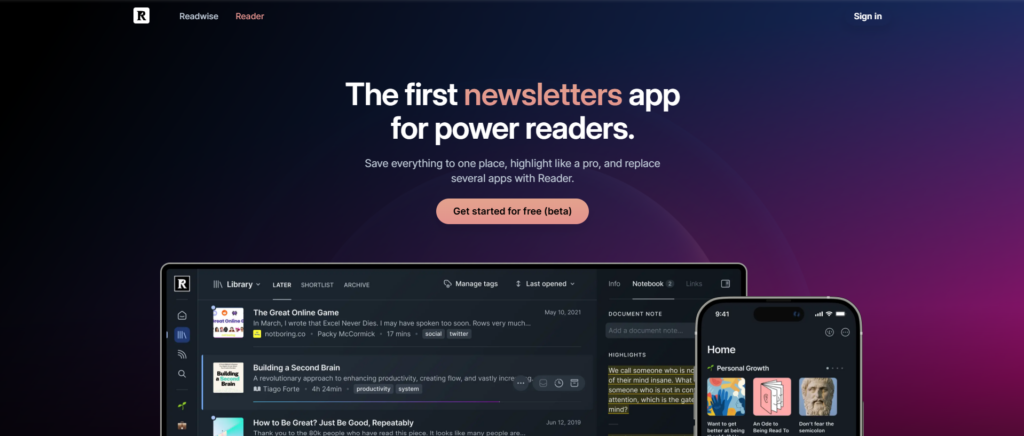
Retrieval has changed even more dramatically. Forte’s system assumes you’ll remember where you filed something or browse through your PARA folders to find it. AI-powered search in tools like Mem and Obsidian (with plugins) lets you ask natural-language questions like “What did I save about pricing strategy for SaaS products?” and get relevant results without perfect organization. This fundamentally reduces the penalty for imperfect filing.
That said, AI retrieval isn’t magic. It works best when your notes contain enough context. If you capture a vague snippet with no annotation, even the smartest AI will struggle to surface it usefully. So Forte’s emphasis on intentional capture, adding your own thoughts to what you save, actually becomes more important in an AI-assisted workflow, not less.
One Reddit user in the r/productivity community put it well:
“The PARA system gave me the discipline to organize, but AI gave me the speed. I use both.”
Shifting Expectations for Personal Productivity
Beyond AI, the cultural conversation around productivity has shifted. In 2022, optimization culture was at peak enthusiasm. People built elaborate Notion dashboards, tracked every metric, and treated their personal knowledge systems like enterprise software. By 2026, there’s a visible backlash. Books like Cal Newport’s Slow Productivity and Oliver Burkeman’s Four Thousand Weeks have pushed many professionals to question whether building complex systems is itself a form of procrastination.

This matters for Building a Second Brain because the book requires real upfront investment. Setting up PARA, developing a capture habit, learning progressive summarization, these take weeks to internalize. If you’re in the camp that believes systems should be invisible and minimal, the book can feel over-engineered.
The rise of “tool fatigue” is also real. Many professionals now cycle through apps every 6–12 months, and maintaining a Second Brain across platform migrations is genuinely painful. Forte acknowledges this in his online courses but the book itself doesn’t address it deeply.
Still, Forte’s framework is tool-agnostic in theory. The principles work whether you use Notion, Obsidian, Apple Notes, or a paper notebook. The challenge is that the book’s examples lean heavily on specific digital workflows that can feel dated if you’re using a 2026-era tool stack.
Where the Framework Still Holds Up
Even though the shifts, several core elements of the Second Brain methodology remain genuinely valuable. Let’s be specific.
First, the PARA method is still one of the cleanest organizational frameworks available. The insight that you should organize by actionability rather than category solves a problem most people don’t even realize they have. If you’ve ever spent 10 minutes hunting for a note you know you saved “somewhere,” switching to PARA will likely fix that. No AI tool has replaced the need for a clear mental model of where things live.
Second, the concept of intermediate packets continues to deliver real ROI. A 2024 survey by Reclaim.ai found that knowledge workers spend roughly 3.6 hours per week recreating information that already exists somewhere in their files. Intermediate packets directly attack this waste. If you build a library of reusable outlines, frameworks, and research summaries, you compound your efforts over time.
Third, the capture habit itself is timeless. Forte’s insistence that you save only what resonates, not everything, is a critical filter in an age of infinite content. AI can summarize articles for you, but it can’t decide which ideas are meaningful to your specific goals. That judgment call is human, and Forte gives you a practical heuristic for it.
Here’s a quick comparison of what’s aged well versus what needs updating:
| Concept | Still Relevant? | Notes |
|---|---|---|
| PARA Organization | ✅ Yes | Tool-agnostic, clean mental model |
| Progressive Summarization | ⚠️ Partially | AI handles much of this now |
| Intermediate Packets | ✅ Yes | Saves 3+ hours/week for consistent users |
| Capture Habit | ✅ Yes | Human judgment still required |
| Specific Tool Workflows | ❌ Outdated | 2022 tool landscape doesn’t match 2026 |
| CODE Framework | ✅ Yes | Solid thinking model, even if steps are faster now |
If you want a single tool to carry out these ideas today, Notion remains the most flexible option for building a Second Brain. Its AI features now handle summarization and retrieval, while its database structure maps naturally to PARA. A Notion subscription pays for itself if you use it as your central knowledge hub. For a physical complement to your digital system, the Leuchtturm1917 Bullet Journal is excellent for quick capture when you don't want screen time.

Where the Approach Falls Short Today
The book’s biggest blind spot is collaboration. Forte’s Second Brain is fundamentally a personal system. But modern knowledge work is increasingly team-based, and the frameworks in the book don’t translate cleanly to shared environments. If your team uses a shared Notion workspace or Confluence, your personal PARA structure can clash with organizational taxonomies.
Another gap: the book underestimates maintenance. A Second Brain that you don’t regularly prune becomes digital clutter, just organized clutter. Forte mentions periodic reviews, but the book doesn’t give you a practical maintenance schedule or a framework for deciding when to archive or delete. Over time, this leads to the very information overload the system was supposed to solve.
The retrieval model also shows its age. Forte’s approach assumes you will browse, search, or stumble upon the right note at the right time. In 2026, the expectation has shifted to proactive retrieval, your system should surface relevant notes to you based on context. Tools like Mem and some Obsidian plugins already do this. The book’s retrieval philosophy feels passive by current standards.
Finally, there’s the learning curve issue. Several reviewers on Goodreads have noted that the book is better at explaining what to do than how to sustain it.
One reviewer wrote:
“I built the system in a weekend and abandoned it in a month” (Goodreads reviews). Sustainability is the real challenge, and the book could do more to address habit formation and motivation.
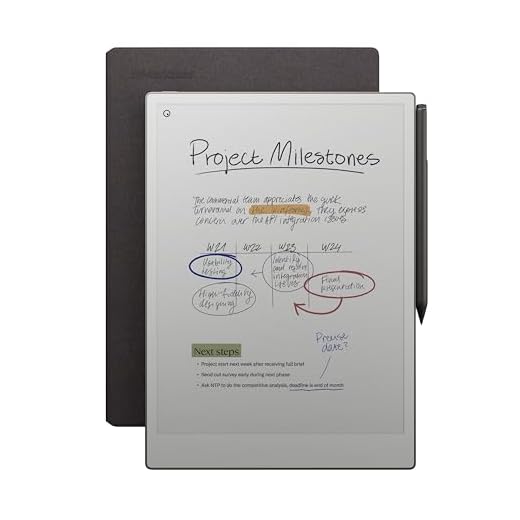
For those who struggle with maintaining digital systems, an analog fallback helps. The Remarkable 2 tablet bridges the gap between paper and digital, letting you handwrite notes that sync to your knowledge system without the friction of typing everything.
Who Should Still Read Building a Second Brain
This book delivers the highest ROI for a specific type of reader. If you’re a knowledge worker, consultant, writer, researcher, marketer, developer, who handles large volumes of information across multiple projects, the Second Brain framework will likely save you time within the first month of implementation.
You should also read it if you’ve never had any personal knowledge management system. Even with AI tools available, most people lack a consistent method for capturing and organizing what they learn. The book gives you that foundation. Think of it as learning to cook before buying a Thermomix. The fundamentals matter regardless of what tools you layer on top.
But, skip it if you’re already deep into a personal knowledge management practice with tools like Obsidian or Logseq. You’ll find the book’s advice basic compared to what the PKM community has developed since 2022. The Linking Your Thinking community by Nick Milo offers more advanced frameworks that build on, and in some cases surpass, Forte’s ideas.
Also skip it if you’re looking for a book about AI-assisted productivity. That’s simply not what this is. Forte has addressed AI integration in his online courses and blog, but the book itself predates the current wave.
Here's the bottom line: Building a Second Brain remains one of the best introductions to personal knowledge management available. Its principles are sound, its framework is clean, and its core insight, that your brain is for having ideas, not holding them, is more true in 2026 than it was in 2022. Just don't treat it as a software manual. Treat it as a philosophy with a practical backbone, and then adapt the tools to match today's landscape.
Frequently Asked Questions
Is Building a Second Brain by Tiago Forte still relevant in 2026?
Yes, Building a Second Brain is still relevant in 2026. Its core philosophy—externalize your thinking and organize for action—remains sound. However, some manual workflows like Progressive Summarization have been partially replaced by AI tools. The book is best treated as a mindset guide rather than a step-by-step software tutorial.
What is the CODE method in Building a Second Brain?
CODE stands for Capture, Organize, Distill, and Express. It’s Tiago Forte’s four-step framework for turning scattered digital information into actionable knowledge. You selectively save what resonates, organize by project using the PARA method, summarize key insights progressively, and turn stored knowledge into tangible output.
How does the PARA method work for organizing notes?
PARA organizes information into four categories: Projects, Areas, Resources, and Archives. Instead of filing notes by topic, you sort them by actionability—placing a note wherever it’s most needed right now. This project-based approach remains one of the cleanest organizational frameworks available and is still widely used in 2026.
Can AI tools replace the need for a Second Brain system?
AI tools like Notion AI, Mem, and Microsoft Copilot automate summarization and retrieval but can’t replace the entire system. They speed up steps like distilling and searching notes, yet human judgment is still essential for deciding what to capture and which ideas matter to your goals. A hybrid approach works best.
What are the best apps for building a Second Brain in 2026?
Notion remains the most flexible option, with AI-powered summarization and a database structure that maps naturally to the PARA method. Obsidian and Mem are strong alternatives offering AI-assisted retrieval and linking. For analog capture, tools like the Leuchtturm1917 Bullet Journal or Remarkable 2 tablet complement any digital setup.
Who should read Building a Second Brain and who should skip it?
The book delivers the highest ROI for knowledge workers—consultants, writers, researchers, marketers—handling large volumes of information across projects. It’s also ideal if you’ve never had a personal knowledge management system. Skip it if you’re already experienced with tools like Obsidian or Logseq, as advanced PKM communities now offer more sophisticated frameworks.
Sources:
- The Official ‘Building a Second Brain’ Resource Center
- The Study Hacks Blog: Deep Work and Minimalism
- How people are integrating AI with Tiago Forte’s methods
- Case studies on digital organization for creative professionals
- Atomic Habits – The 2026 Update on Habit Tracking
- How to Build a Second Brain in 2026 with New Tools
Read More: