

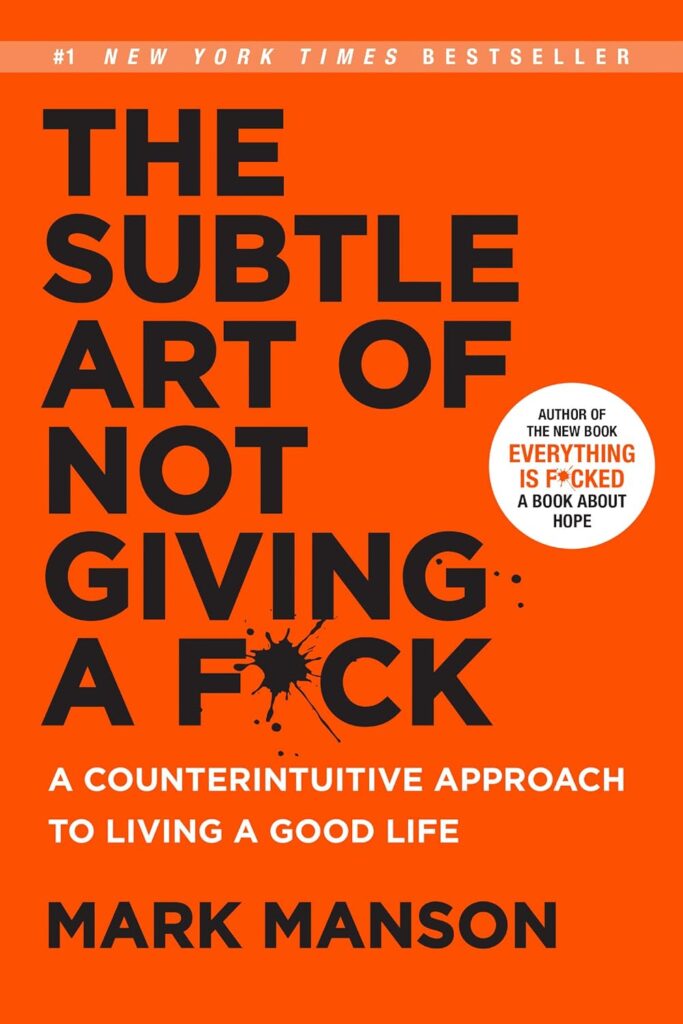
Your obsession with positivity might be quietly destroying your happiness. Mark Manson’s provocative bestseller “The Subtle Art of Not Giving a F*ck” demolishes feel-good philosophies with raw honesty, challenging everything you believe about success and contentment.
Does "The Subtle Art of Not Giving a F*ck" actually work for better living? Absolutely. Mark Manson's counterintuitive approach reveals why caring less about superficial concerns leads to deeper fulfillment, offering practical wisdom for navigating life's inevitable struggles without toxic positivity or delusional optimism.
The Positivity Epidemic
Modern self-help culture has created an insidious problem that most people never recognize. Consequently, Mark Manson’s “The Subtle Art of Not Giving a F*ck” emerges as an antidote to what he calls the “feel-good” mindset that has infected contemporary society. Rather than promoting endless optimism, Manson advocates for strategic indifference toward things that don’t truly matter.
Furthermore, the book systematically deconstructs the myth that happiness comes from avoiding problems or maintaining constant positivity. This approach differs dramatically from traditional self-help literature that promises quick fixes and perpetual joy. Instead, Manson argues that problems are inevitable and even necessary for personal growth.
The current self-help landscape overflows with empty platitudes about manifesting success and thinking positive thoughts. According to Goodreads reviews, readers consistently praise Manson’s refreshing departure from this superficial approach. His methodology focuses on choosing meaningful struggles rather than avoiding all discomfort.
You and everyone you know are going to be dead soon. And in the short amount of time between here and there, you have a limited amount of f*cks to give. Mark Manson
Counterintuitive Philosophy
The book’s strength emerges through Manson’s ability to flip conventional wisdom on its head while maintaining logical coherence. He demonstrates how pursuing happiness directly often leads to misery, while accepting life’s inherent difficulties creates genuine contentment. This paradoxical approach challenges readers to examine their fundamental assumptions about what constitutes a good life.
Additionally, Manson introduces the concept of “backwards law” – the idea that the more desperately you want something, the less likely you are to achieve it. Research from behavioral psychology supports this counterintuitive principle, showing how excessive attachment to outcomes often sabotages success. The author uses compelling examples to illustrate how this principle applies across various life domains.
The book also explores how modern society’s obsession with exceptionalism creates widespread unhappiness. Manson argues that most people will lead ordinary lives, and accepting this reality paradoxically opens the door to extraordinary experiences. This message resonates particularly strongly with millennials who grew up believing they were special and destined for greatness.
Manson’s background as a blogger who built his audience through provocative honesty lends authenticity to his contrarian approach. Unlike many self-help gurus who promote unrealistic fantasies, he acknowledges his own failures and limitations throughout the narrative.
Values-Based Living
Moving beyond surface-level advice, Manson provides a framework for identifying and prioritizing meaningful values. He distinguishes between superficial values like material success and deeper values like honesty, vulnerability, and personal responsibility. This distinction becomes crucial for determining where to invest your limited emotional energy.
The book reveals how many people unconsciously adopt values imposed by society, parents, or peer groups without questioning whether these align with their authentic selves. Manson provides practical exercises for evaluating current values and consciously choosing ones that support genuine fulfillment rather than external validation.
Moreover, the author emphasizes that good values are process-oriented rather than outcome-dependent. Instead of valuing “being right,” choose “learning from mistakes.” Rather than pursuing “being liked by everyone,” prioritize “expressing authentic opinions.” These shifts create sustainable satisfaction that doesn’t depend on external circumstances.
The values framework also addresses how to handle inevitable conflicts between competing priorities. Manson’s approach helps readers make difficult decisions by clarifying what truly matters versus what merely feels urgent or socially expected.
The F*ck Budget
One of the book’s most practical concepts involves treating your emotional investment like a finite resource. Consequently, Manson introduces the metaphor of having limited “f*cks” to distribute throughout your life. This scarcity mindset forces conscious choices about what deserves your mental and emotional energy.
The f*ck budget operates on multiple levels, from daily annoyances to life-defining decisions. Minor irritations like traffic jams or social media drama drain the same resource as major challenges like career changes or relationship conflicts. Understanding this helps readers reserve energy for battles that actually matter.
Additionally, the concept addresses how constant outrage and offense-taking depletes psychological resources. Modern psychology research validates Manson’s assertion that sustained anger and indignation harm mental health more than the original triggering events. Strategic emotional detachment becomes a form of self-care.
The author also explores how social media amplifies trivial concerns while diminishing attention for significant issues. His framework provides tools for filtering information and choosing conscious responses rather than automatic reactions to every stimulus.
The desire for more positive experience is itself a negative experience. And, paradoxically, the acceptance of one’s negative experience is itself a positive experience. Mark Manson
Responsibility Without Blame
The book tackles one of the most challenging aspects of personal development: taking responsibility for your life circumstances without falling into self-blame or victim-shaming. Manson carefully distinguishes between fault (what happened to you) and responsibility (how you choose to respond). This nuanced approach acknowledges that while you can’t control every external event, you maintain complete authority over your reactions.
Furthermore, this perspective empowers readers to focus energy on changeable factors rather than dwelling on past injustices or current limitations. The responsibility principle becomes particularly powerful when applied to relationships, career dissatisfaction, and mental health challenges. Rather than waiting for external conditions to improve, readers learn to create change through conscious choices.
The author also addresses how victimhood mentality, while sometimes providing short-term comfort, ultimately disempowers people from creating meaningful change. This message proves controversial but resonates with readers tired of feeling helpless in their own lives. Manson’s approach offers practical alternatives to both toxic positivity and learned helplessness.
However, the book maintains compassion for genuine trauma and difficult circumstances while still advocating for personal agency within whatever constraints exist. This balanced approach avoids the trap of simplistic “just think positive” advice that ignores real structural and psychological obstacles.
Relationship Wisdom
Transitioning to interpersonal dynamics, Manson provides refreshingly honest insights about healthy relationships that contradict popular romantic narratives. He argues that sustainable partnerships require both individuals to maintain separate identities and interests rather than seeking completion through another person. This perspective challenges codependent patterns disguised as romantic love.
The book explores how neediness and desperation repel the very connection people seek. Manson explains that attractive qualities like confidence and authenticity can’t be faked or manufactured through techniques. Instead, they develop naturally when individuals focus on their own growth and values rather than external validation.
Moreover, the author addresses conflict resolution in relationships by advocating for honest communication over conflict avoidance. He demonstrates how disagreements and even arguments can strengthen bonds when handled with maturity and respect. This approach contrasts sharply with advice that prioritizes harmony over authenticity.
The relationship section also covers friendship dynamics, family relationships, and professional interactions. Manson’s principles apply broadly to any situation where people seek genuine connection rather than superficial pleasantries or manipulative tactics.
Death and Meaning
Perhaps surprisingly for a book marketed with provocative language, Manson dedicates significant attention to mortality and existential meaning. He argues that confronting death’s inevitability paradoxically enhances life’s richness by clarifying priorities and reducing attachment to trivial concerns. This philosophical depth distinguishes the book from lighter self-help offerings.
The death awareness section connects with ancient philosophical traditions, particularly Stoicism and Buddhism, while maintaining Manson’s contemporary voice. He shows how modern society’s death avoidance contributes to anxiety and poor decision-making. Accepting mortality becomes a tool for authentic living rather than morbid preoccupation.
Additionally, the author explores how awareness of life’s brevity can motivate decisive action rather than paralysis. When filtered through mortality salience, many daily worries reveal themselves as insignificant distractions from meaningful pursuits. This perspective helps readers distinguish between urgent and important priorities.
The existential framework also addresses purpose and legacy without falling into grandiose fantasies about lasting impact. Manson advocates for finding meaning in immediate relationships and experiences rather than expecting to change the world or achieve immortality through accomplishments.
Score: 8/10
This book deserves strong recognition for its refreshing honesty and practical philosophy, though it may not resonate with readers seeking gentle encouragement or step-by-step instructions. Manson successfully challenges toxic positivity while providing constructive alternatives for approaching life’s inevitable challenges.
The primary limitation involves the book’s provocative language and aggressive tone, which may alienate readers who could benefit from the underlying wisdom. Additionally, some concepts require more development and practical application guidance than Manson provides.

What Will You Learn
After reading “The Subtle Art of Not Giving a F*ck,” you’ll understand:
- How to distinguish between superficial and meaningful values for better decision-making
- Why accepting problems and suffering leads to greater happiness than avoidance
- The difference between fault and responsibility in personal circumstances
- How neediness and desperation sabotage relationships and goals
- Why confronting mortality clarifies life priorities and reduces anxiety
- Practical strategies for emotional regulation without toxic positivity
- The connection between authentic self-expression and genuine confidence
- How to choose conscious responses rather than automatic reactions
Reader Testimonials
It’s kind of subtle…and kind of aggressive…and definitely helpful. It’s a great blend of humor, bluntness, kindness and humanity needed to remind us that we’re not as important as we think we are, while also reminding us that we’re special and deserve love. ADAM J. CANTU, verified purchaser
What a fantastic book! I devoured it in two sittings. Mastering the art of letting go is laid out in a way that doesn’t sound like typical self-help jargon. He’s relatable and funny, inspiring and motivational. Sue Coletta, verified purchaser
This was a great read. Mark’s brash tone comes off as genuine, not attention seeking. It’s as though he was compelled to share the lessons that helped him, making his book closer to a thoughtful journal than a “I know better” self help book. Nathan John Kunz, verified purchaser
Pros and Cons
Pros:
- Refreshingly honest alternative to toxic positivity and unrealistic self-help promises
- Practical philosophy backed by psychological research and philosophical traditions
- Engaging writing style that makes complex ideas accessible and memorable
- Challenges readers to examine fundamental assumptions about happiness and success
- Addresses both individual psychology and relationship dynamics comprehensively
Cons:
- Provocative language and aggressive tone may alienate some potential readers
- Some concepts need more detailed practical application guidance
Implementation Framework
The book provides actionable strategies organized around core principles:
Values Clarification Process:
- Identify current values List what you actually spend time, money, and energy pursuing
- Evaluate value quality Distinguish between process-oriented and outcome-dependent values
- Choose conscious values Select principles that align with authentic self rather than external expectations
- Practice value-based decisions Use chosen values as filters for daily choices and commitments
F*ck Budget Management:
- Assess current investments Notice where emotional energy currently goes
- Eliminate trivial concerns Stop reacting to minor inconveniences and social media drama
- Reserve resources for important battles Focus energy on changeable situations that align with values
- Practice strategic indifference Consciously choose not to care about uncontrollable circumstances
Philosophy in Practice
The book’s philosophical framework translates into concrete behavioral changes that readers can implement immediately. Rather than requiring major life overhauls, Manson’s approach works through gradual shifts in perspective and response patterns. This accessibility makes profound concepts applicable to everyday situations.
Contemporary psychology research supports many of Manson’s core assertions about happiness, meaning, and emotional regulation. Studies consistently show that people who accept negative emotions experience better mental health than those who suppress or avoid difficult feelings. This validates the book’s anti-positivity stance with empirical evidence.
The practical applications extend across multiple life domains, from career decisions to parenting approaches. Readers report applying the values framework to major choices while using the f*ck budget concept for daily stress management. This versatility makes the book relevant regardless of specific life circumstances.
Cultural Impact Analysis
Since publication, “The Subtle Art of Not Giving a F*ck” has influenced broader conversations about mental health, productivity culture, and authentic living. The book’s success reflects growing dissatisfaction with superficial self-help approaches and unrealistic social media representations of perfect lives. Manson’s message resonates particularly with audiences overwhelmed by choice and external expectations.
The cultural timing proves significant, as millennials and Gen Z face unprecedented levels of anxiety and depression despite material prosperity. Traditional self-help approaches often exacerbate these problems by promoting impossible standards and ignoring systemic challenges. Manson’s acceptance-based approach offers realistic alternatives.
Critics argue that the book’s privileged perspective ignores structural inequalities and systemic barriers that limit individual agency. However, supporters contend that the responsibility principle empowers people within whatever constraints they face. This ongoing debate reflects broader tensions in contemporary self-help culture.
Verdict
“The Subtle Art of Not Giving a F*ck” succeeds as both philosophical treatise and practical guide, offering readers permission to stop pursuing happiness and start living authentically. Manson’s counterintuitive approach provides valuable tools for navigating modern life’s complexity without falling into either toxic positivity or hopeless cynicism.
The book’s lasting value lies in its integration of ancient wisdom with contemporary psychology, delivered through an accessible voice that doesn’t condescend or oversimplify. Whether readers embrace every aspect of Manson’s philosophy or simply absorb selected insights, the book challenges assumptions and promotes conscious living over automatic reactions.
Most importantly, “The Subtle Art of Not Giving a F*ck” gives readers permission to be imperfect, to struggle, and to care deeply about carefully chosen priorities while releasing attachment to everything else. In an era of information overload and constant comparison, this message provides essential psychological relief and practical guidance.
The book’s influence extends beyond individual readers to broader cultural conversations about authenticity, mental health, and meaningful success. By reading and applying these principles, you’re participating in a necessary corrective to our culture’s unrealistic expectations and superficial solutions.
Video Credit: Mark Manson / YouTube
Frequently Asked Questions
Is this book appropriate for people dealing with serious mental health issues?
While the book offers valuable philosophical insights, readers with severe depression, anxiety, or trauma should approach it cautiously. Manson’s confrontational style and emphasis on personal responsibility might feel overwhelming during acute mental health struggles. The book works best as complementary reading alongside professional therapy rather than a substitute for clinical treatment.
That said, many readers with mild to moderate mental health challenges find Manson’s approach refreshing compared to overly optimistic self-help books. His acknowledgment of life’s inherent difficulties can provide validation for people tired of being told to “just think positive.” The key is timing and context.
Does the book promote selfishness or lack of empathy toward others?
Not at all. Manson carefully distinguishes between healthy boundaries and callous indifference. The “not giving a f*ck” philosophy applies to trivial annoyances and others’ opinions about your authentic choices, not to treating people poorly or ignoring genuine suffering. The book actually promotes deeper empathy by encouraging readers to focus energy on relationships and causes that truly matter.
The values framework specifically includes compassion and connection as worthy of care and attention. Manson argues that strategic emotional investment allows for more meaningful engagement with important relationships rather than spreading yourself thin across every social obligation.
How does this book compare to traditional philosophical texts on similar topics?
Manson draws heavily from Stoic philosophy, existentialism, and Buddhist concepts while translating these ideas into contemporary language and examples. Readers familiar with Marcus Aurelius, Camus, or Buddhist teachings will recognize similar themes presented through modern cases and irreverent humor.
The book serves as an accessible introduction to deeper philosophical concepts that might intimidate readers approaching ancient texts directly. However, those seeking rigorous philosophical argumentation may find Manson’s approach occasionally superficial compared to original sources.
Can the principles be applied to professional environments and career decisions?
Absolutely. The values clarification process proves particularly valuable for career choices, helping readers distinguish between meaningful work and status-seeking positions. The f*ck budget concept applies directly to workplace drama, office politics, and professional criticism that doesn’t contribute to actual performance improvement.
Many readers report using Manson’s framework to set healthier boundaries at work, focus on controllable performance factors, and make decisive career moves based on authentic values rather than external expectations or family pressure.
Is the provocative language essential to the book’s message or just attention-seeking?
Manson addresses this directly, explaining that the provocative language serves as a “Trojan horse” to draw readers into deeper philosophical discussions they might otherwise avoid. The casual profanity also models authentic self-expression over polished social performance, reinforcing the book’s core themes about genuine versus artificial presentation.
However, the substantive ideas remain intact when translated into more formal language, as evidenced by academic and professional discussions of the book’s concepts. Readers uncomfortable with profanity can focus on the underlying framework while ignoring stylistic elements that don’t resonate.
Purchase: Get The Subtle Art of Not Giving a F*ck on Amazon
Sources:
- Mark Manson Official Website
- Goodreads Reader Reviews
- Wikipedia – The Subtle Art of Not Giving a Fuck
- Medium Review Analysis
- Self-Help Book Analysis 2025
Read More: